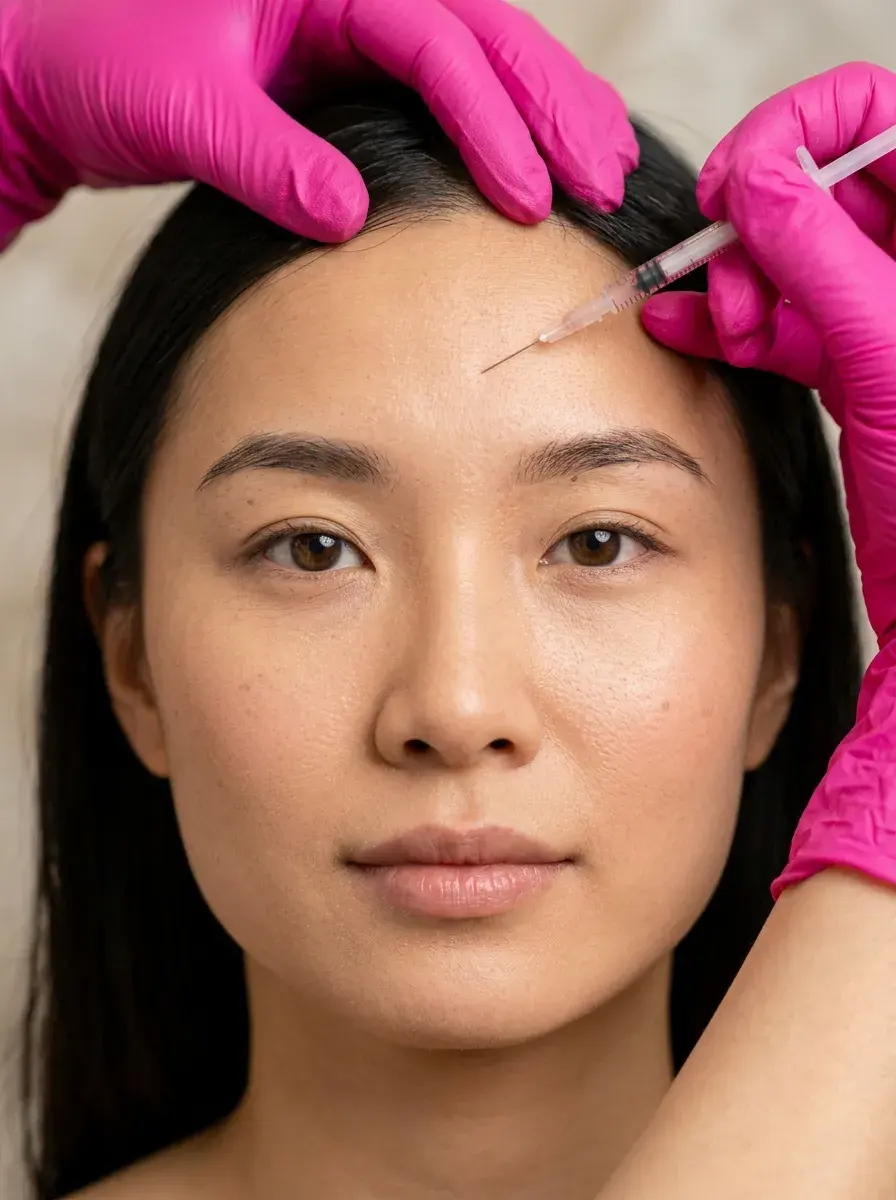
Almost everyone who books their first Botox appointment wants a number. How many units for the forehead. How many for the whole upper face. Whether the amount their friend got is the amount they need. It is a fair thing to want, because units are how the treatment is measured and, in most clinics, how it is priced.
The honest answer is that the number is set for you, not read off a chart. Unit counts move with muscle strength, anatomy, and the result you are after. What this guide gives you is the typical range for each area, so you walk in with a realistic picture. Your exact plan is decided at your consultation, once we see how your muscles actually move.
A quick note before the ranges. The numbers below are typical starting points we see in our clinic, not a prescription. Two people with the same concern can land in very different places. That is normal, and later in this guide we explain why.
What is a unit of Botox, and how much is a unit?
A unit is how we measure the dose of Botox. It describes how much relaxing effect goes into each point in the muscle, which is a different thing from how much liquid is injected. A stronger muscle needs more units to relax. A smaller or weaker muscle needs fewer. So "units" is really the language of how much relaxing effect an area needs.
Botox and Nuceiva are both measured this way, and both tend to last about 3 to 4 months. When you see a treatment described in units, that is the amount of product, not the number of injection points. One area often takes several small injections that add up to the total units for that zone.
Cost usually follows the unit count, since most clinics price per unit. The number of units you need is a clinical decision first. We work that out at your visit, then explain the plan clearly before anything begins.
How many units of Botox for forehead lines?
The forehead lines that run across when you raise your brows come from one broad muscle, the frontalis. A typical treatment here sits somewhere around 10 to 20 units. Lighter foreheads with softer movement often need less. Stronger, more active foreheads sit at the higher end.
The forehead is the area where restraint matters most. This muscle also lifts your brows, so over-relaxing it can leave the brows feeling heavy. In our clinic we usually treat the forehead in balance with the frown area below it, rather than chasing every line with more product. The aim is a smooth, rested forehead that still moves.
If forehead lines are your main concern, our forehead lines page walks through why they set in and the options beyond Botox.
How many units for frown lines and crow's feet?
The frown lines between your brows, sometimes called the elevens, come from the glabella. This is a group of stronger muscles, so it usually takes a bit more. A typical range is around 15 to 30 units, with many patients near the middle. Deeper, more active frowns need more to soften fully.
Crow's feet sit at the outer corners of the eyes and crease when you smile. These are treated per side. A typical amount is around 5 to 15 units per side, which means roughly 10 to 24 units for both eyes together. Where you land depends on how strongly you squint and how far the lines fan out.
These two areas plus the forehead make up the classic upper-face trio. Many first treatments cover all three.
How many units of Botox for the masseter, or jaw?
The masseter is the large chewing muscle at the back of the jaw. People treat it for two reasons: to ease clenching and grinding, and to slim a square jawline over time. Because this muscle is big and powerful, it needs far more product than the face lines above.
A typical masseter dose is around 20 to 30 units per side, so roughly 40 to 60 units total for both sides. Very strong jaws can sit higher. This is also an area where results build with repeat sessions, since a relaxed muscle gradually reduces in bulk. Masseter treatment also tends to hold a little differently than upper-face treatment, which we cover in our guide on how long Botox lasts.
How many units of Botox for a lip flip?
A lip flip is one of the smallest treatments by dose. A few units placed in the muscle around the upper lip let the edge roll gently outward, so a little more lip shows when you smile. A typical amount is around 2 to 6 units.
Because the dose is tiny, precision is everything here. Too much can affect how you sip, speak, or purse your lips. This is a spot where an experienced hand matters more than a larger number. You can read the full detail on our Botox lip flip page.
How many units of Botox total in one session?
There is no single total, because the total is just the sum of the areas you treat. Someone doing only forehead lines might use around 10 to 20 units. Someone treating the full upper face, meaning forehead, frown, and crow's feet, often lands somewhere around 40 to 60 units. Add a masseter treatment and the total climbs well beyond that, because the jaw alone is a large dose.
A first session is usually conservative. We would rather place a measured amount, see how your muscles respond at your two-week point, and adjust than overtreat on day one. That is the safest way to reach a natural result you are happy with.
Why do unit counts differ from person to person?
This is the reason a fixed chart never tells the whole story. Several things change the number:
- Muscle strength. Stronger muscles need more units to relax. This is the single biggest factor, and it varies widely between people.
- Anatomy. The size and position of a muscle, and where your lines actually sit, shape where each unit goes.
- Your goal. A fully smooth look and a softer, still-mobile look call for different amounts in the same area.
- Sex and muscle mass. On average, stronger or larger muscles need higher doses, which is why ranges are given rather than one figure.
- Treatment history. Muscles that have been treated over time often soften, so returning patients sometimes need a little less to hold their result.
This is exactly why the number is decided in the room. We watch how your muscles move, map where the lines form, and match the dose to your face specifically. Dosing is the part of injectable work Victoria trains other injectors on, and that same care shapes every plan we build.