PRP Therapy
- •Your Own Growth Factors
- •Skin, Hair & Tissue
- •All-Natural Treatment
- •No Foreign Substances
PRP uses concentrated growth factors from your own blood to stimulate collagen production and tissue renewal, revitalizing skin and hair with minimal downtime in a 45-minute session.
4.8★ · 163 Reviews
- Your Own Growth Factors
- Skin, Hair & Tissue
- All-Natural Treatment
- No Foreign Substances
PRP Therapy Applications
What PRP Therapy Treats
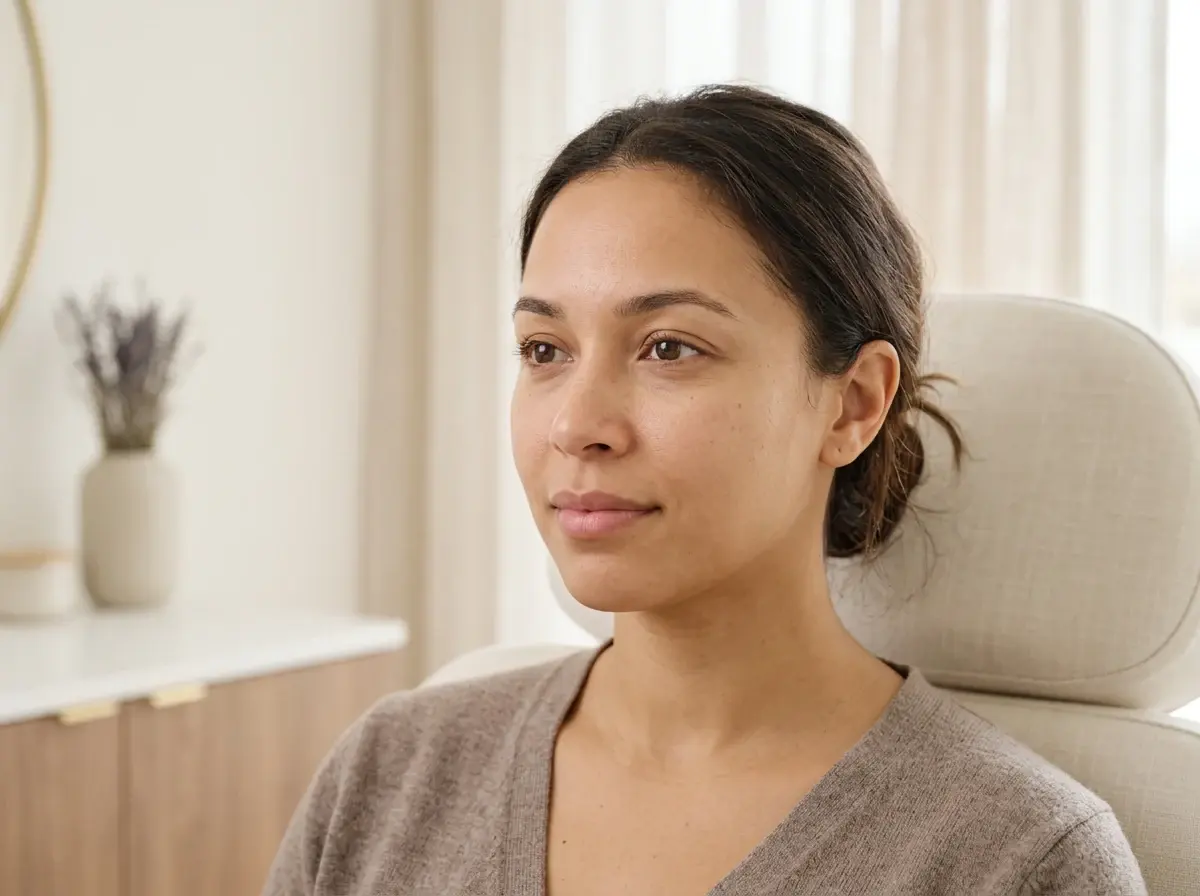
Facial Skin Rejuvenation
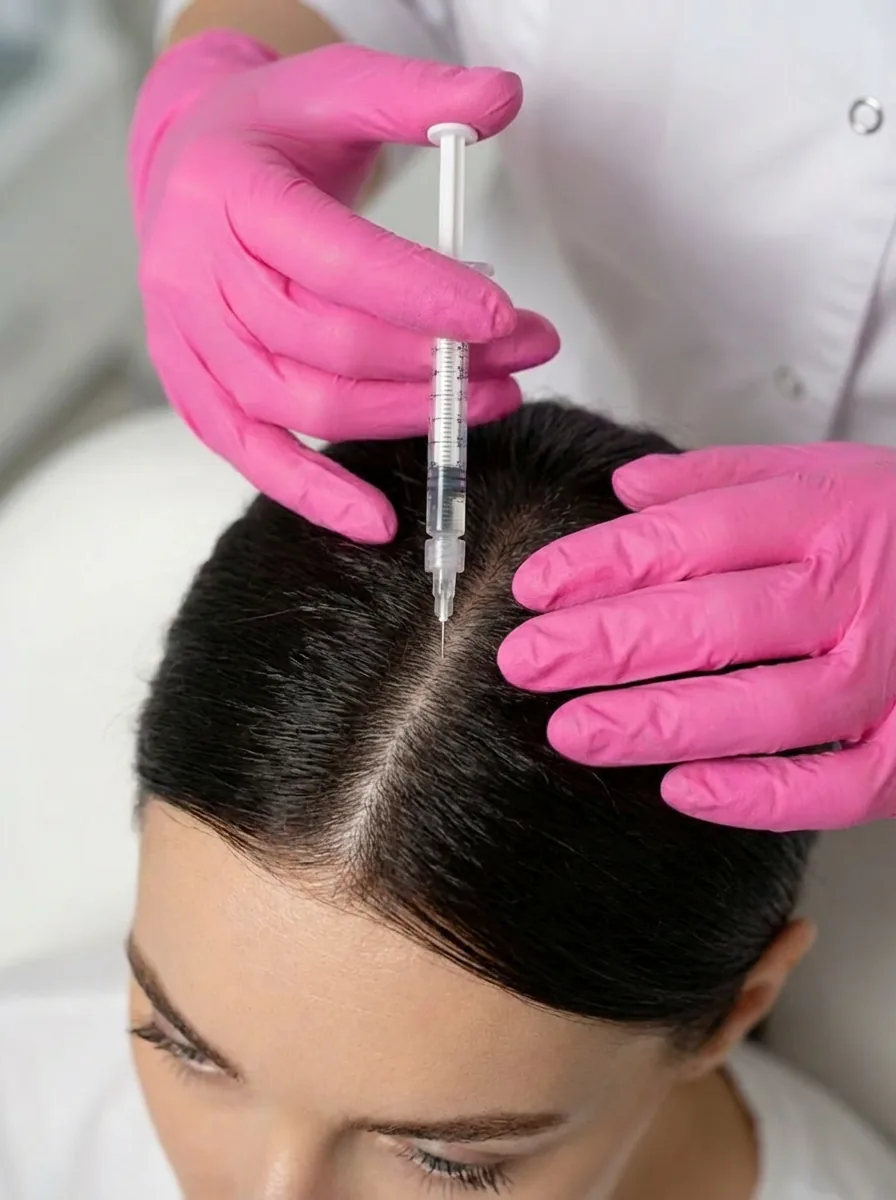
PRP injected into the face stimulates collagen and elastin production, improving skin texture, tone, and early laxity over a series of sessions.
Treatments+
Growth factors from your own blood are injected into the face to stimulate collagen and elastin, improving texture, tone, and early laxity over several sessions.
Causes+
Collagen and elastin production slows with age, while sun exposure and dehydration leave skin duller, rougher, and less firm.
PRP Therapy Results
What to expect, from your first session to peak results
Immediate (Day 1)
Day 1 · minimal downtime
The blood draw, centrifugation, and injection take 45 to 60 minutes in total. Mild redness and swelling at the injection sites usually settle within 24 to 48 hours. Avoid makeup and sun exposure for the first 24 hours.
Weeks 2 to 6
Weeks 2-6 · regeneration begins
Growth factors stimulate collagen and elastin as the tissue repairs. Skin patients start to notice improvements in texture, hydration, and tone. Hair patients often see reduced shedding and the first signs of new growth.
Full Results (Session 3+)
Session 3+ · peak results
Full results from a complete three-session course are typically visible two to three months after the final treatment. Skin looks firmer and more even, and hair density continues to improve. Annual maintenance helps hold the gains.
The VRA Experience
Why Patients Choose VRA for PRP Therapy
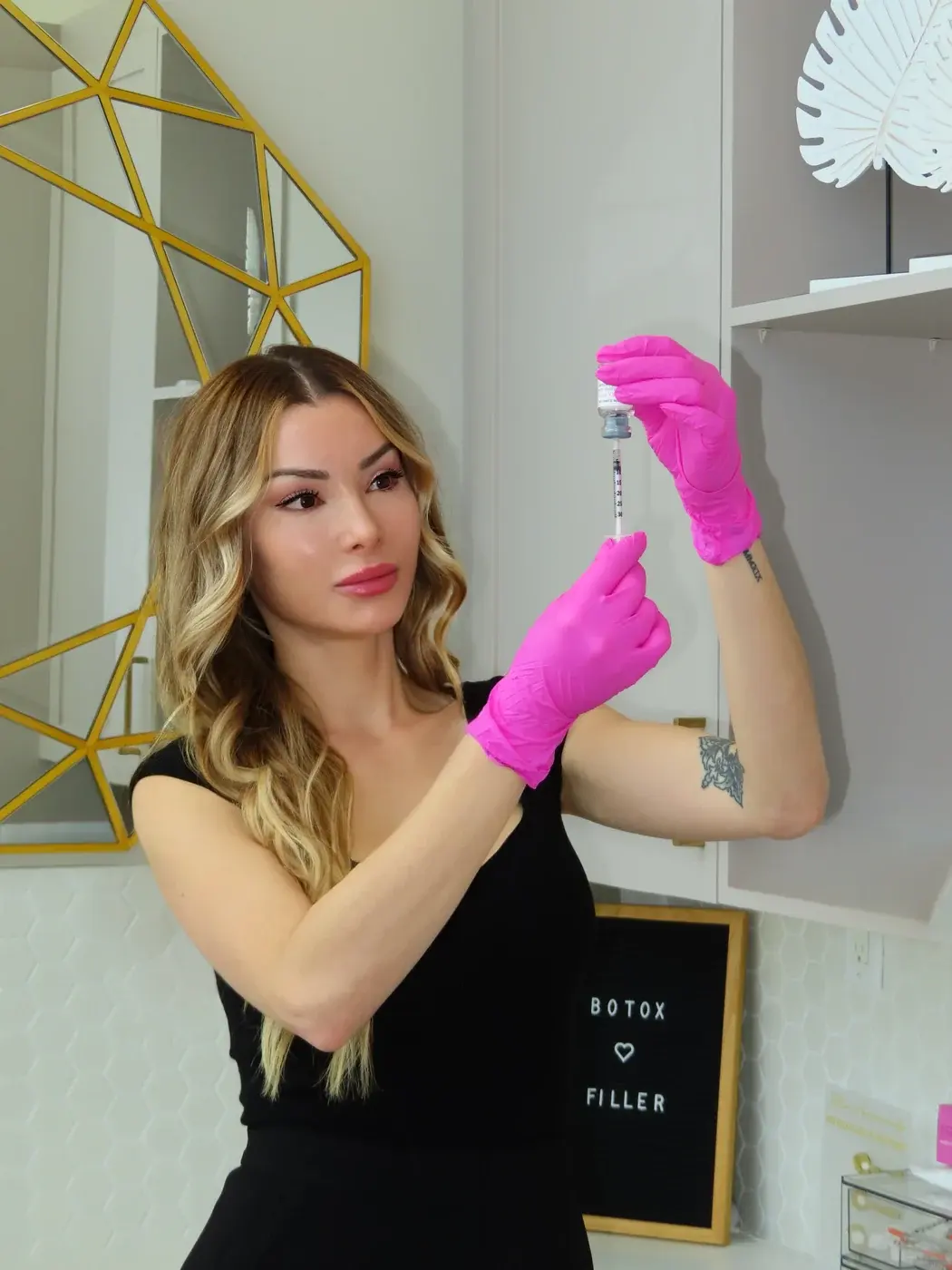
Victoria Rose Cyr, RN, BScN, brings over a decade of clinical experience, and years spent teaching it, first in the classroom and now as a national clinical trainer for a respected aesthetics brand. Today that expertise goes into her Pickering practice and the team of experts she's built around it.
Victoria Rose Cyr is a Registered Nurse (BScN) and the founder of Victoria Rose Aesthetics, with 10 years of clinical experience, six years running her own practice, and five years as a national clinical trainer. She sets the clinical standard every treatment at VRA is held to.
Victoria is a clinical trainer for Nuceiva and Teosyal, mentoring physicians, nurses, med spa owners, and injectors across Canada in precise, evidence-based technique.
PRP is drawn and processed on site and administered by a trained VRA practitioner under medical oversight, to the standard Victoria sets.
Patient Reviews
What Our Patients Say
Honest words from patients at Victoria Rose Aesthetics in Pickering.
I recently had a Sofwave treatment at Victoria Rose Aesthetics and the entire experience exceeded my expectations. From the moment I walked in, the space felt elevated, welcoming, and incredibly…
Antonella Calandra
Victoria Rose Aesthetics · Pickering
Treatment Process
PRP Therapy Treatment Process
From your first consultation through maintenance, here is exactly what to expect at every step of your PRP Therapy at Victoria Rose Aesthetics.
Step 01 · Consultation
Consultation and Assessment
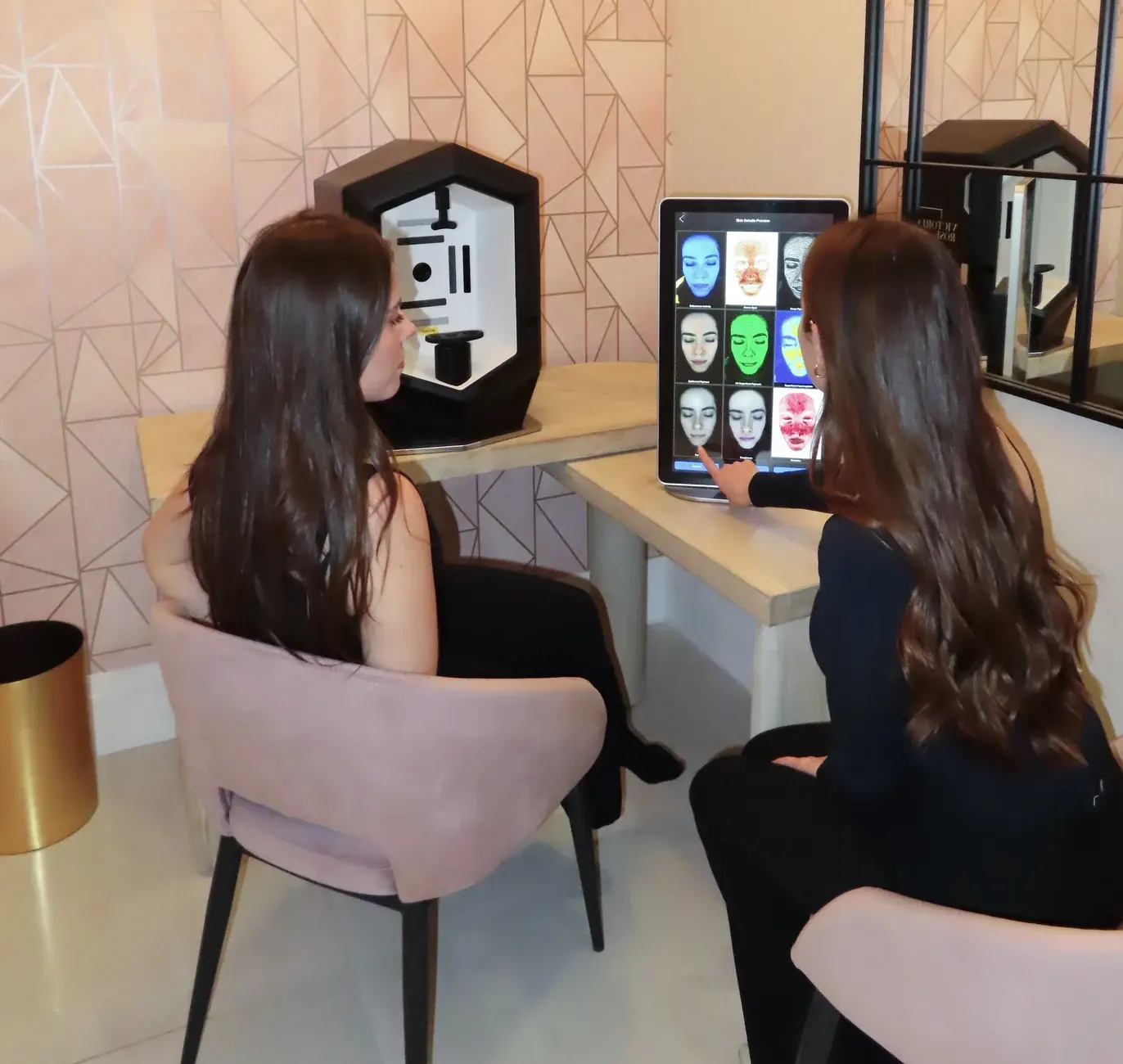
We assess your skin or hair concern, confirm your suitability for PRP, and create a protocol. Patients on certain blood thinners or with specific medical conditions may not be candidates. Your nurse reviews your medical history thoroughly.
- Skin or hair concern assessed for suitability
- Medical history reviewed thoroughly by your nurse
- A protocol built around your goals
Skin Club for PRP Treatments
Amplify Your PRP Results with Monthly Skin Club Facials
A monthly professional facial complements your PRP protocol by maintaining skin health at the surface while PRP works deeper. Skin Club members receive a facial each month, 15% off skincare products, and priority booking at every visit.
Monthly professional facial included
15% off medical-grade skincare products
Priority booking at every visit
PRP Therapy Pricing Pickering
Why Patients Choose VRA for PRP Therapy in Pickering
How your PRP turns out depends heavily on how it is prepared and placed, so we treat both with care from the first consultation.
Medical-Grade Preparation
Concentration
A medical-grade centrifuge concentrates your platelets properly, since the quality of the PRP preparation directly affects the result.
Concern-Specific Protocol
Tailored
Your protocol is built around your specific skin or hair concern, with depth, placement, and session count chosen for your case.
Course Planned Upfront
Full Plan
We map the full course and maintenance from the first consultation, so you know the timeline and what each session adds.


The right plan starts with the right assessment.
Same-week consultations. No referral required.
FAQ
Your PRP Therapy Questions,
Answered by Victoria
Everything you need to know about PRP treatment before your appointment at Victoria Rose Aesthetics.
Yes. PRP is autologous. It uses your own blood, so there is no risk of allergic reaction or rejection. The main risks are standard injection-related concerns like bruising and temporary soreness at injection sites.
A course of 3 sessions spaced 4 to 6 weeks apart is recommended for most applications. Scalp PRP for hair loss may require 3 to 6 sessions depending on the degree of hair thinning.
PRP results are gradual, improvements in skin texture and hair density typically appear 4 to 6 weeks after each session. Full results from a complete 3-session course are typically visible 2 to 3 months after the final treatment.
Yes. PRP is frequently combined with microneedling for enhanced skin penetration, and can be used alongside laser treatments on a complementary schedule. Combining PRP with microneedling delivers growth factors directly into the dermis for amplified collagen stimulation.
The PRP preparation is the same, the application differs. For hair, PRP is injected directly into the scalp using a series of superficial injections along the thinning zones. For skin, it is injected subdermally or applied topically during microneedling.
They work differently. PRP stimulates cellular regeneration and collagen production over time. Hyaluronic acid injection adds immediate volume. For patients with very hollow tear troughs, hyaluronic acid injection may be more impactful. For patients with fine lines, dark circles from poor circulation, and mild hollowing, PRP is a natural first step.
PRP, or Platelet Rich Plasma, is a regenerative treatment that uses concentrated growth factors from your own blood to stimulate collagen production, tissue repair, and cellular renewal. A small blood sample is drawn and spun in a centrifuge for 10 to 15 minutes, separating the platelet-rich plasma from red blood cells. The concentrated PRP is then injected into the target area with fine needles or applied topically during microneedling. At Victoria Rose Aesthetics in Pickering, our RN injectors perform PRP for skin quality, under-eye hollowing, scarring, and hair restoration. Because PRP is autologous (it comes from you), there is no risk of allergic reaction or rejection. A standard course is 3 sessions spaced 4 to 6 weeks apart.
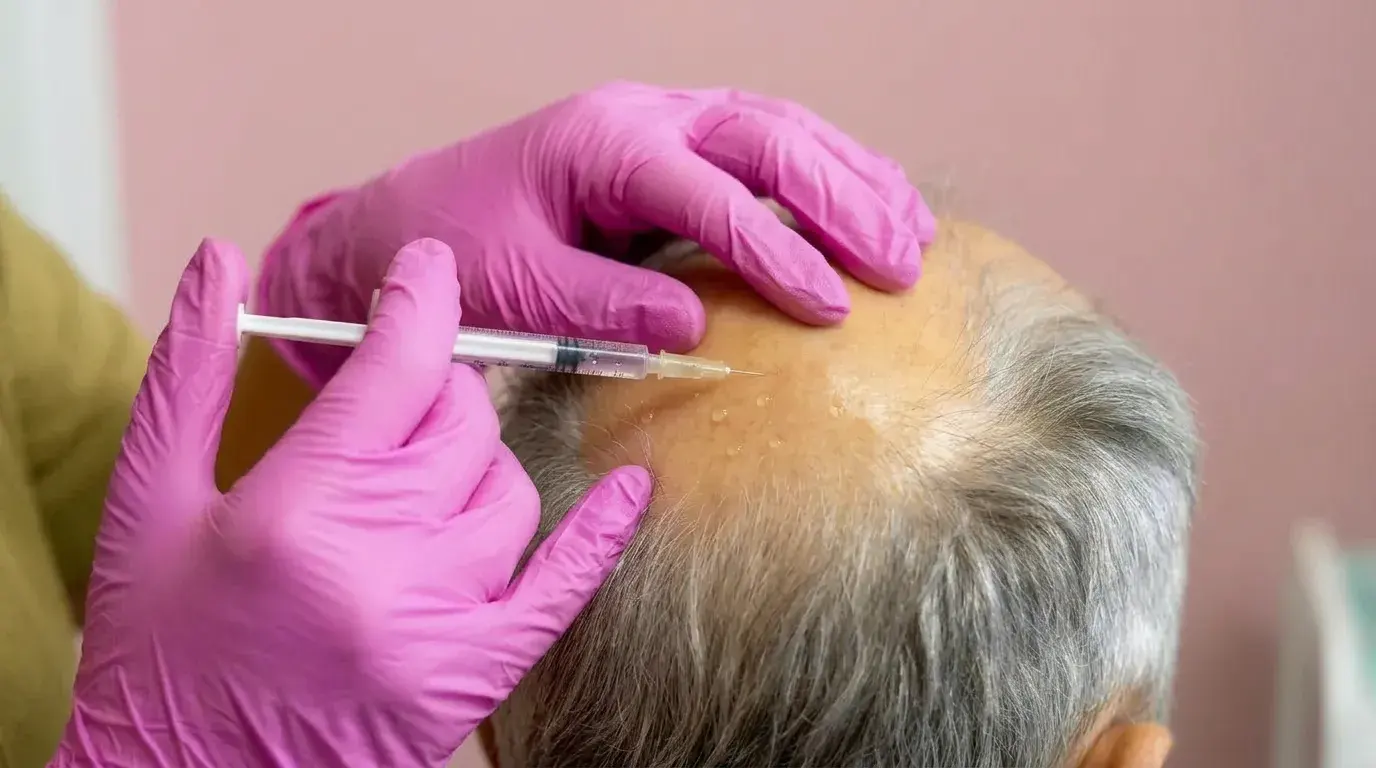
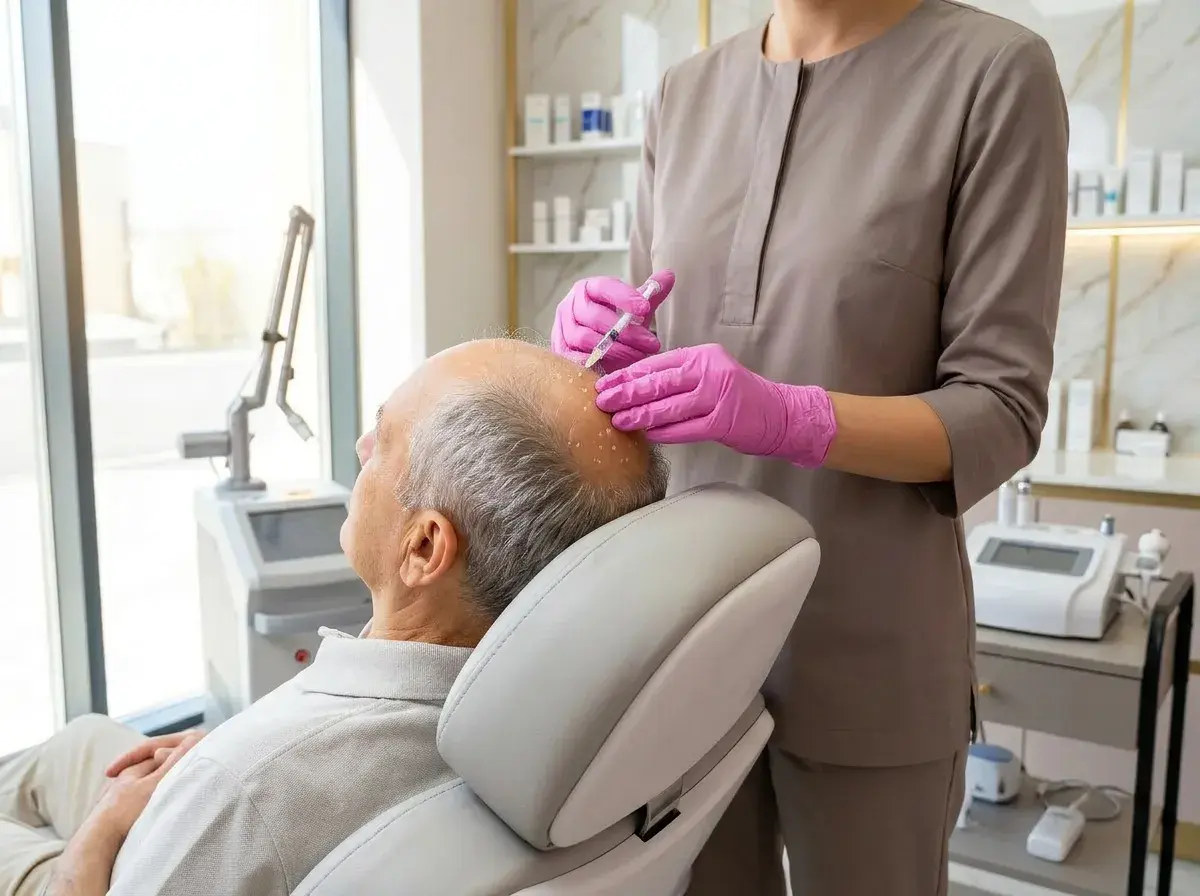
PRP for hair is a non-surgical scalp treatment for androgenetic alopecia, diffuse thinning, and early-stage shedding. It uses growth factors from your own blood to support dormant follicles and slow further thinning. A small blood sample is drawn and spun in a centrifuge for 10 to 15 minutes to isolate the platelet-rich plasma, then injected across the scalp in a fine grid using fine needles, focusing on the hairline, crown, or diffuse thinning zones. The concentrated platelets release growth factors that improve follicular vascularity and prolong the active growth phase. Candidates with intact, miniaturized follicles tend to respond best, while fully scarred or burnt-out follicles will not regrow, which is why an honest assessment comes first. Your VRA injector performs the assessment and the injections at Victoria Rose Aesthetics in Pickering. A standard course is 3 sessions spaced 4 to 6 weeks apart, with annual maintenance. Reduced shedding and visible regrowth typically become apparent around the 3 to 6 month mark. Because PRP is autologous, there is no risk of allergic reaction.
No. PRP and stem cell therapy are different regenerative treatments, though they are often grouped together in patient conversations. PRP uses concentrated platelets from your own blood. The platelets release growth factors that signal surrounding cells to repair tissue, build collagen, and improve vascularity. Stem cell therapy uses undifferentiated cells, typically harvested from bone marrow or adipose tissue, that can develop into different cell types. PRP is widely offered in Canadian aesthetic medicine and is what our RN injectors perform at Victoria Rose Aesthetics. Stem cell aesthetic treatments are not Health Canada-approved for cosmetic indications and are not offered at the clinic. If you have been researching both options, book a consultation to discuss what PRP can realistically achieve for your concern.
PRP therapy pricing depends on the area being treated, the number of sessions in your course, and whether PRP is combined with microneedling. Most aesthetic clinics in the GTA price per session, with a standard course of 3 sessions spaced 4 to 6 weeks apart. Because PRP is autologous and requires a blood draw, centrifugation, and precision injection technique, it sits above topical treatments in price but below surgical hair restoration. At Victoria Rose Aesthetics in Pickering, your VRA injector walks you through the full protocol cost during your consultation, including maintenance recommendations. Many patients budget annually, since results are gradual and a single annual top-up session typically maintains the initial gains. Book a consultation for an accurate quote based on your specific concern.