Sleep Apnea & Snoring (NightLase)
- •Fotona NightLase
- •No Surgery, No Devices
- •Reduce Snoring
- •6-Session Protocol
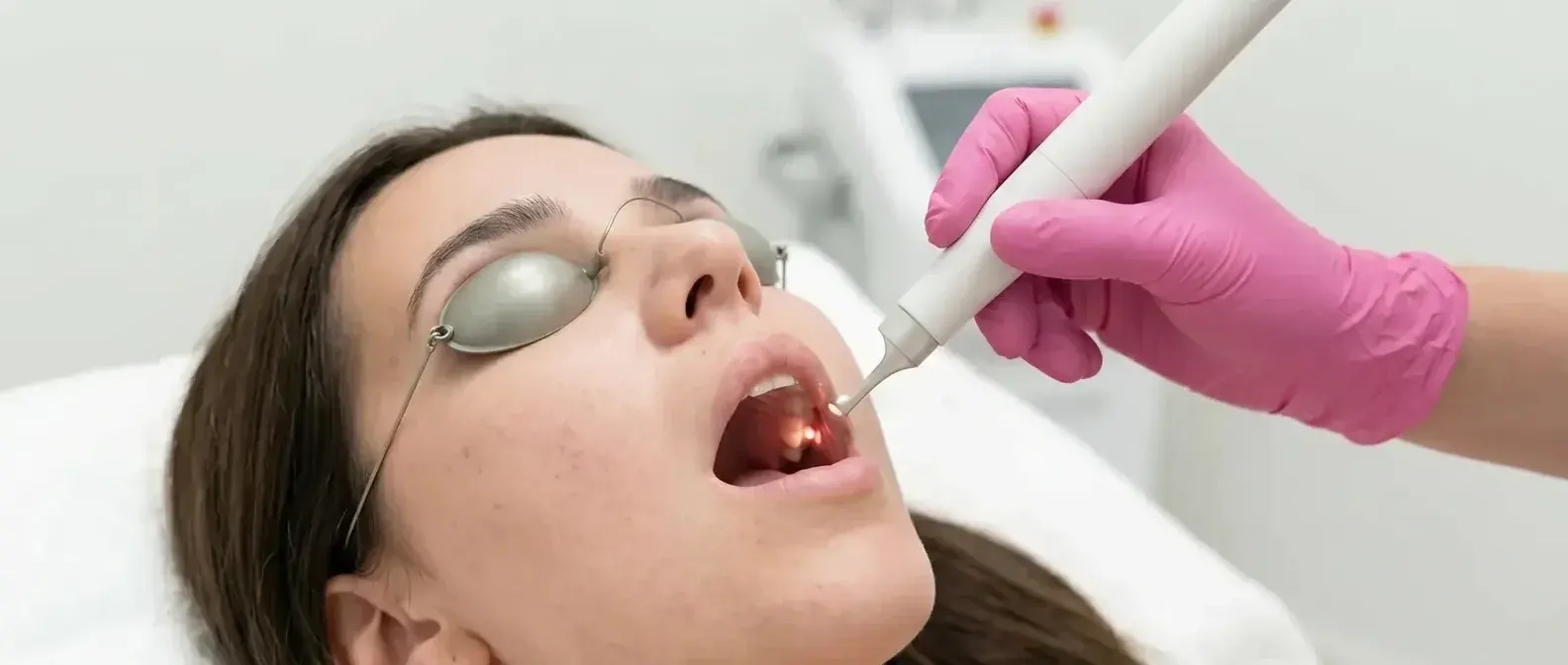
NightLase is a snoring laser treatment. It uses Er:YAG laser therapy that tightens the soft palate to reduce snoring and mild sleep apnea over a six-session protocol, with no anaesthesia, no surgery, and normal activities immediately after.
4.8★ · 163 Reviews
- Fotona NightLase
- No Surgery, No Devices
- Reduce Snoring
- 6-Session Protocol
NightLase Treatment Goals
What NightLase Treats
Chronic Snoring
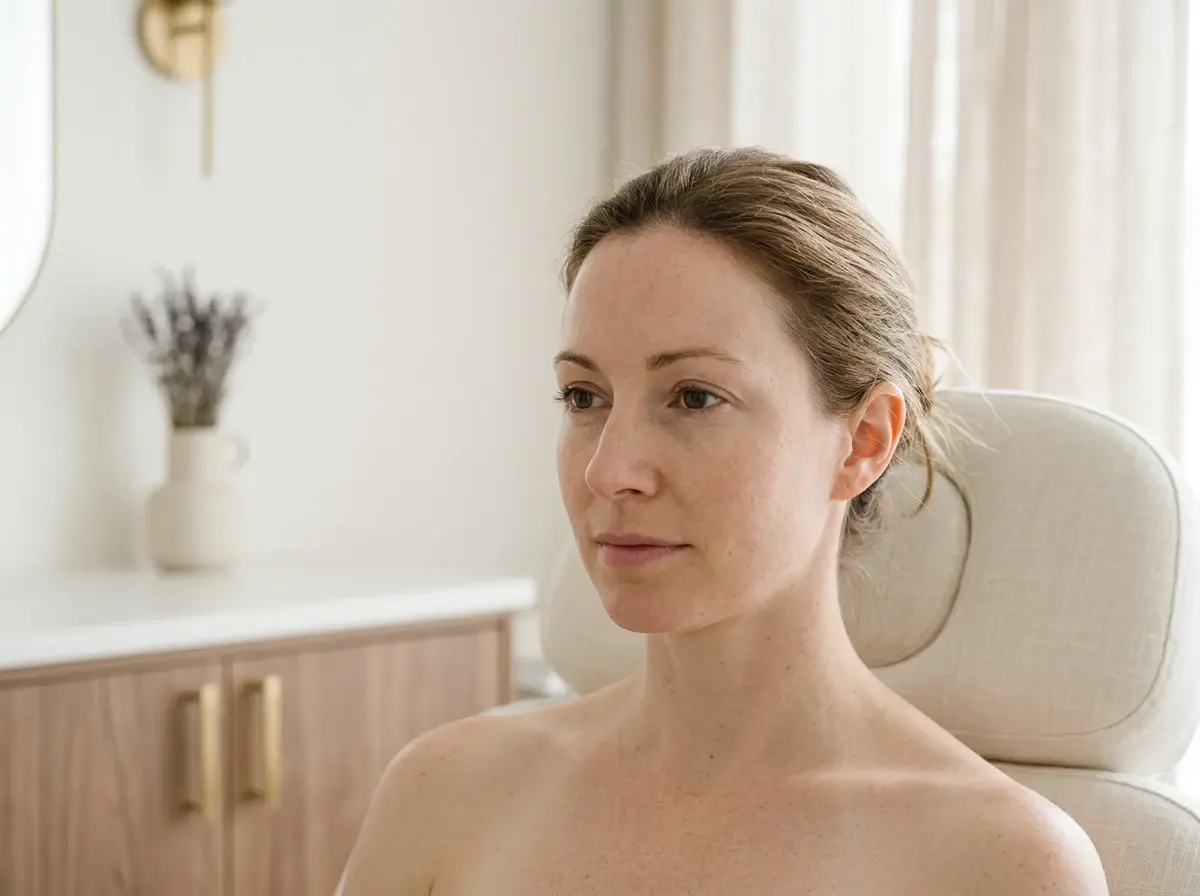
Laser tightening of the soft palate reduces the tissue vibration responsible for snoring, significantly decreasing snoring frequency and volume for both patient and partner.
Treatments+
NightLase Er:YAG laser heats and tightens the soft palate, reducing the loose-tissue vibration that causes snoring. Across six sessions, snoring grows quieter and less frequent.
Causes+
Air passing over relaxed, slack tissue at the back of the throat and soft palate makes it vibrate during sleep.
NightLase Results
What to expect across the six-session protocol
Sessions 1 and 2
Sessions 1 and 2 · early change
Some patients and their partners notice an early reduction in snoring in the opening sessions. The laser starts the tissue-tightening process in the soft palate, and the effect accumulates with each visit rather than appearing all at once.
Sessions 3 and 4
Sessions 3 and 4 · building
Most patients experience meaningful snoring reduction through the middle of the series. Airway openness continues to improve as the soft palate tightens further with the progressive collagen remodelling the laser triggers.
Sessions 5 and 6
Sessions 5 and 6 · full result
By the end of the six-session protocol, most patients reach their full result, with snoring noticeably quieter and sleep quality improved for both partners. The effect typically lasts around 12 months, and annual maintenance sessions help sustain it.
The VRA Experience
Why Patients Choose VRA for Sleep Apnea & Snoring
Victoria Rose Cyr, RN, BScN, brings over a decade of clinical experience, plus years spent teaching it, first in the classroom and now as a national clinical trainer for a respected aesthetics brand. Today that expertise goes into her Pickering practice and the team of experts she's built around it.
Victoria Rose Cyr is a Registered Nurse (BScN) and the founder of Victoria Rose Aesthetics, with 10 years of clinical experience, six years running her own practice, and five years as a national clinical trainer. She sets the clinical standard every treatment at VRA is held to.
Victoria trains physicians, nurses, and injectors across Canada in precise, evidence-based technique, and brings that same standard to every treatment her team delivers at VRA.
NightLase is delivered over a planned series by a trained VRA practitioner, following the established protocol to the standard Victoria sets.
Patient Reviews
NightLase Reviews from Our Pickering Patients
Honest words from patients at Victoria Rose Aesthetics in Pickering.
I recently had a Sofwave treatment at Victoria Rose Aesthetics and the entire experience exceeded my expectations. From the moment I walked in, the space felt elevated, welcoming, and incredibly…
Antonella Calandra
Victoria Rose Aesthetics · Pickering
Treatment Process
NightLase Treatment Process
From your first consultation through schedule, here is exactly what to expect at every step of your Sleep Apnea & Snoring (NightLase) at Victoria Rose Aesthetics.
Step 01 · Consultation
Consultation and Airway Assessment
We assess your snoring severity, airway anatomy, and medical history. Patients with moderate to severe sleep apnea requiring CPAP are referred for sleep medicine consultation before considering NightLase.
- Snoring severity and airway anatomy assessed
- Medical history reviewed together
- Moderate to severe apnea referred to sleep medicine
Skin Club for Wellness Treatments
Save on Your NightLase Protocol
NightLase requires a consistent 6-session protocol. Skin Club preferred pricing makes completing your treatment series more affordable.
Preferred pricing on NightLase sessions
Annual maintenance reminders
Complimentary airway reassessment before retreatment
NightLase Pricing Pickering
Why Patients Choose VRA for NightLase in Pickering
Your NightLase plan starts with an honest assessment of your snoring and airway, so the treatment fits your case rather than the other way around.
Airway Assessment First
Severity-led
We review your snoring severity, airway anatomy, and history before treating, and refer moderate to severe apnea to sleep medicine.
Device-Free Protocol
No mask, no surgery
A planned series of Fotona Er:YAG laser sessions tightens the soft palate with no incisions, no oral appliance, and no anaesthesia.
A Standard You Can Trust
Trained team
Treatment is delivered by a trained VRA practitioner under medical oversight, following the protocol to the standard Victoria sets.


The right plan starts with the right assessment.
Same-week consultations. No referral required.
FAQ
Your NightLase Questions,
Answered by Victoria
Everything you need to know about laser snoring treatment before your appointment at Victoria Rose Aesthetics.
NightLase is a non-surgical, device-free option for snoring and mild sleep apnea. It uses an Er:YAG laser to gently heat the oral mucosa and soft palate, tightening the tissue and reducing the airway vibration that drives snoring and partial obstruction. The protocol is a staged series of six 20 to 30 minute sessions, with no anaesthesia, no incisions, and no oral appliance to wear at night. Annual maintenance sustains the result for most patients. At Victoria Rose Aesthetics in Pickering, NightLase is performed on a Health Canada-approved Fotona platform. Patients with moderate to severe sleep apnea should remain under sleep medicine care; NightLase is an adjunct for mild cases and snoring.
NightLase is an adjunct for snoring and mild sleep apnea, tightening the soft palate and improving airway openness. Patients with moderate to severe sleep apnea should stay under a sleep medicine specialist, where CPAP remains the standard of care. Your practitioner assesses your severity at consultation, to the standard Victoria sets, and refers back to sleep medicine when CPAP is the more appropriate path.
CPAP remains the standard of care for moderate to severe obstructive sleep apnea, but it is not the only option. For mild apnea and snoring, alternatives include mandibular advancement appliances, positional therapy, weight management, ENT surgery for structural obstruction, and laser-based soft-palate tightening such as Fotona NightLase. NightLase tightens the oral mucosa and soft palate over a six-session protocol with no mask, oral device, or anaesthesia. It is an adjunct for snoring and mild apnea, not a CPAP replacement for moderate or severe cases. We will refer back to sleep medicine if your case warrants ongoing CPAP.
Most patients notice reduced snoring after the first session, with the full result emerging across the six-session protocol. Your practitioner confirms the exact schedule for the series at consultation. The Er:YAG laser triggers gradual collagen remodelling in the soft palate, so the tightening builds with each pass rather than appearing all at once. We set realistic timeline expectations based on your snoring severity and airway anatomy.
Six sessions, delivered as a staged series, with the effect building progressively across the course. Your practitioner confirms the exact schedule at consultation. Annual maintenance sessions sustain the result for most patients.
Results typically last around 12 months. Annual maintenance sessions are recommended to sustain the tissue-tightening effect over time.
No. NightLase requires no anaesthesia and is well-tolerated. Mild throat sensitivity for 24 to 48 hours after each session is normal, and you can resume normal activities right away. Avoid very hot foods and drinks for 24 hours after treatment.
No referral is required for snoring treatment. If you have diagnosed sleep apnea, we recommend confirming with your sleep specialist that NightLase is appropriate for your severity level before booking.
Most patients report meaningful feedback from partners about reduced snoring after completing the six-session protocol, and many couples describe the improvement in sleep quality as significant for both people in the bed.