Forehead Lines
The lines that stay after your face goes still.
You notice them in a photo before the mirror. Three or four horizontal lines across the forehead, sharper than a year ago. They appear when you raise your brows, and a faint trace now stays behind once you relax your face.

Forehead Lines
The lines that stay after your face goes still.
You notice them in a photo before the mirror. Three or four horizontal lines across the forehead, sharper than a year ago. They appear when you raise your brows, and a faint trace now stays behind once you relax your face.
CONCERN & CAUSES
What Forehead Lines Look Like
Most patients arrive somewhere between two stages of the same line. In the treatment room, forehead lines split into a few presentations, and each one points to a different lever.
01
Frontalis Movement
The frontalis is the single muscle that lifts your brows, and every contraction folds the skin above it horizontally, which is the movement that first creates a forehead line.
02
Dynamic Lines
Dynamic lines appear only while you raise your brows, concentrate, or react, and they smooth out fully at rest, which makes this the earliest and the most treatable stage of the line.
03
Static Lines
Static lines stay visible even when your face is relaxed, because the crease has been folded so often that the dermis has lost the ability to recover its surface on its own.
04
Collagen Loss
As collagen and elastin slow with age and UV exposure, the dermis gradually thins, so each contraction leaves a deeper crease the skin has less structure left to bounce back from.
Treatment Benefits
Softening Movement and Rebuilding Forehead Lines in Pickering
Forehead lines respond to two levers. Victoria, an RN with over a decade of clinical experience, softens the muscle first so the skin stops being folded, then rebuilds the dermis where the crease has already etched in.
Botox
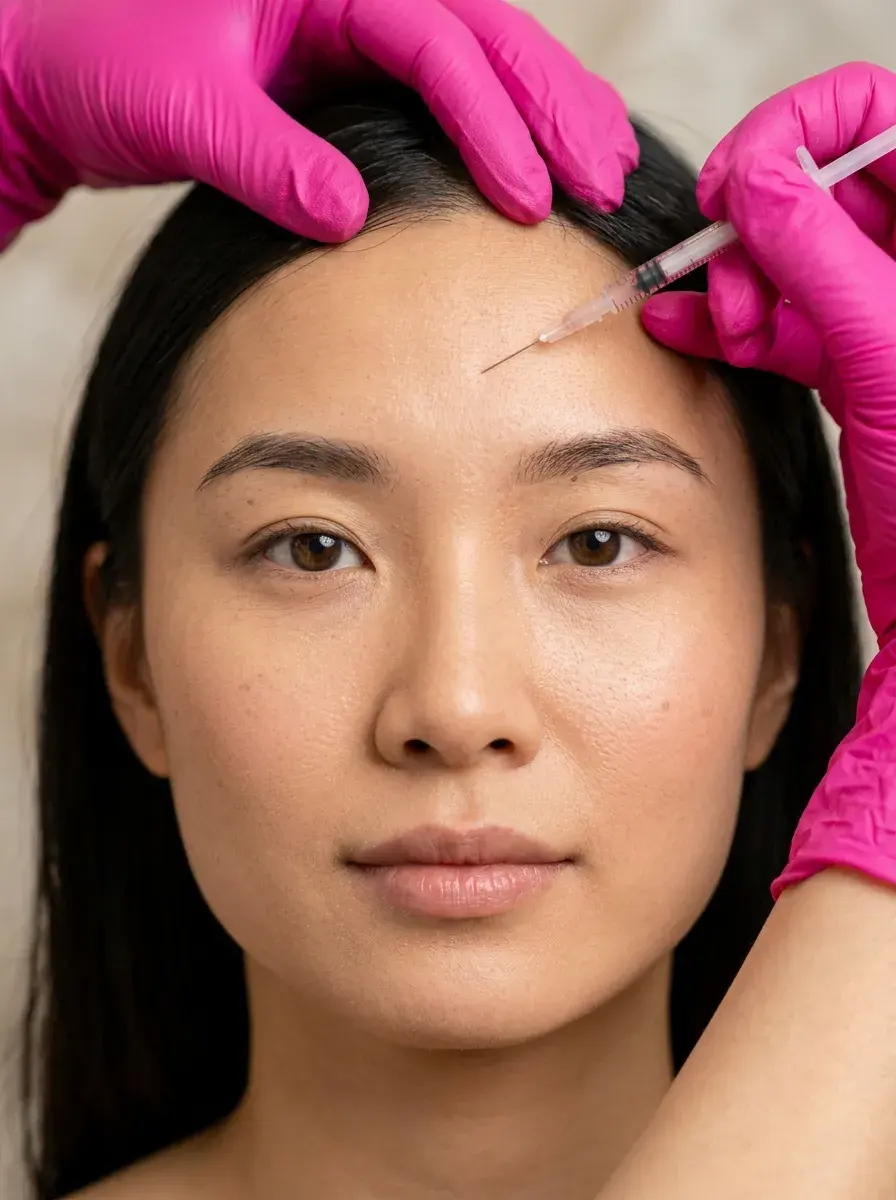
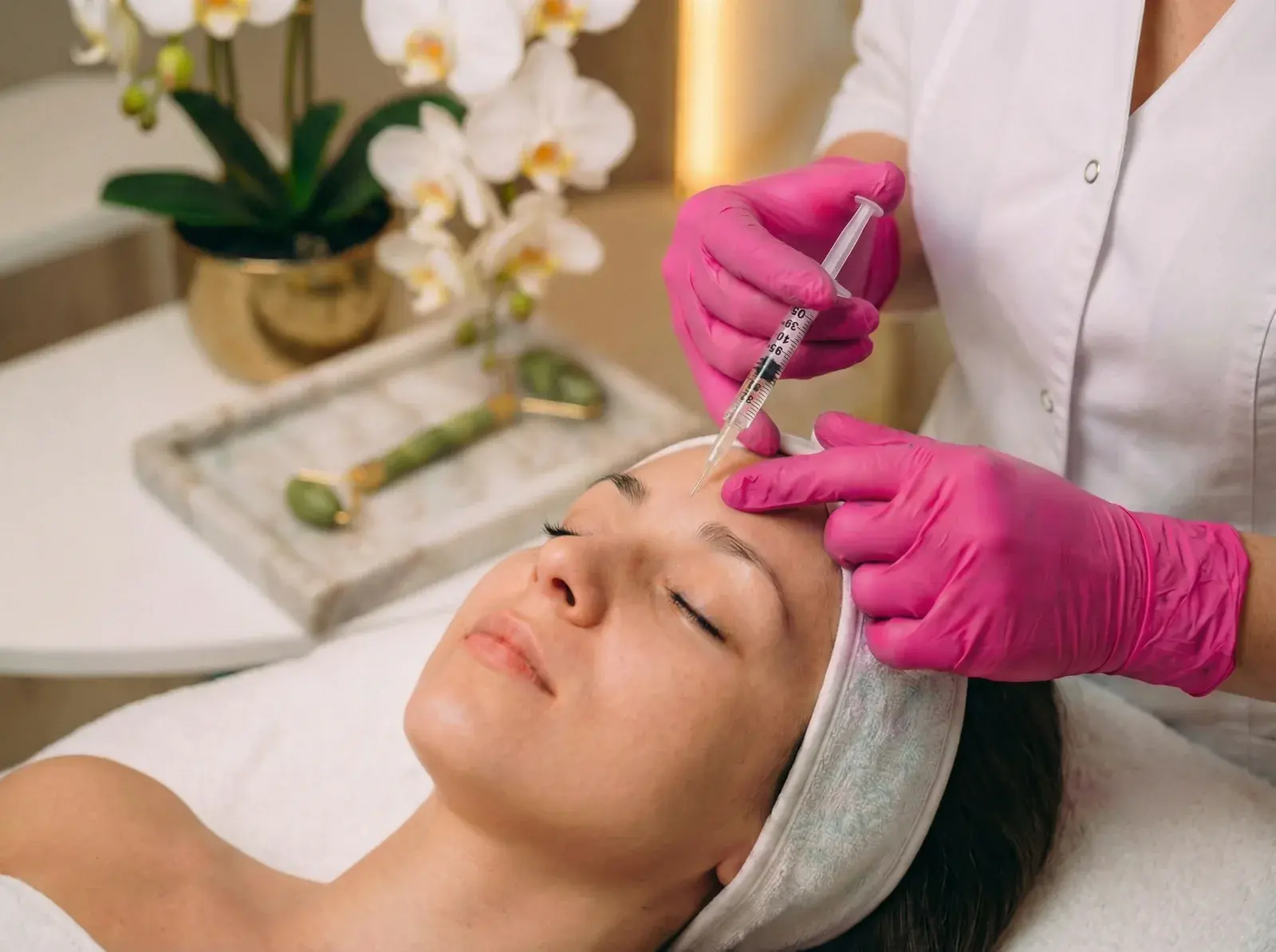
A mapped dose of a muscle-relaxing protein placed into the frontalis muscle to reduce the strength of the contraction that folds the skin and forms horizontal forehead lines.
Botox Brow Lift
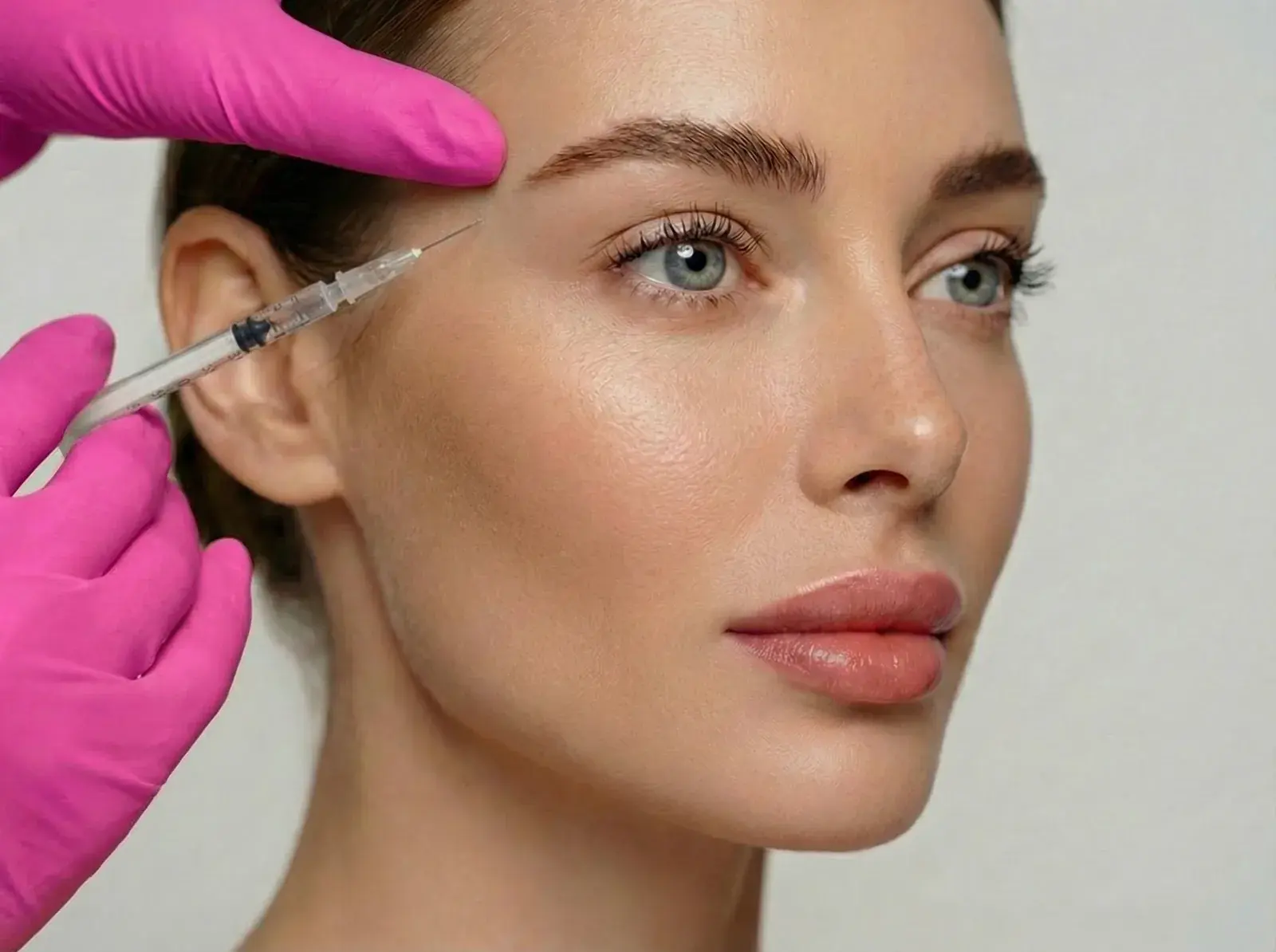
A placement that relaxes the brow-depressor muscles around and between the brows, so the brow sits a little higher and more open after the frontalis is softened.
RF Microneedling
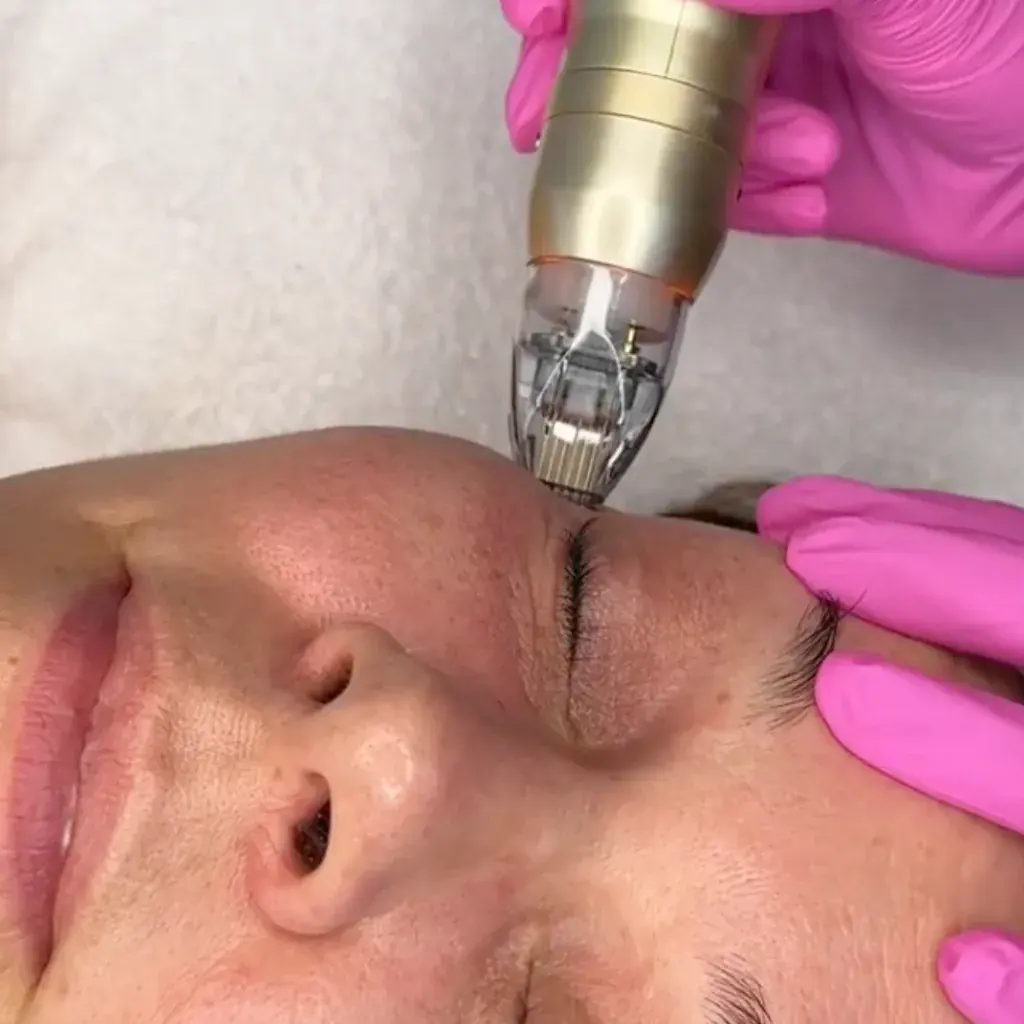
Microneedling combined with radiofrequency energy delivered into the dermis at precise depths, targeting the layer where a static forehead line has etched in.
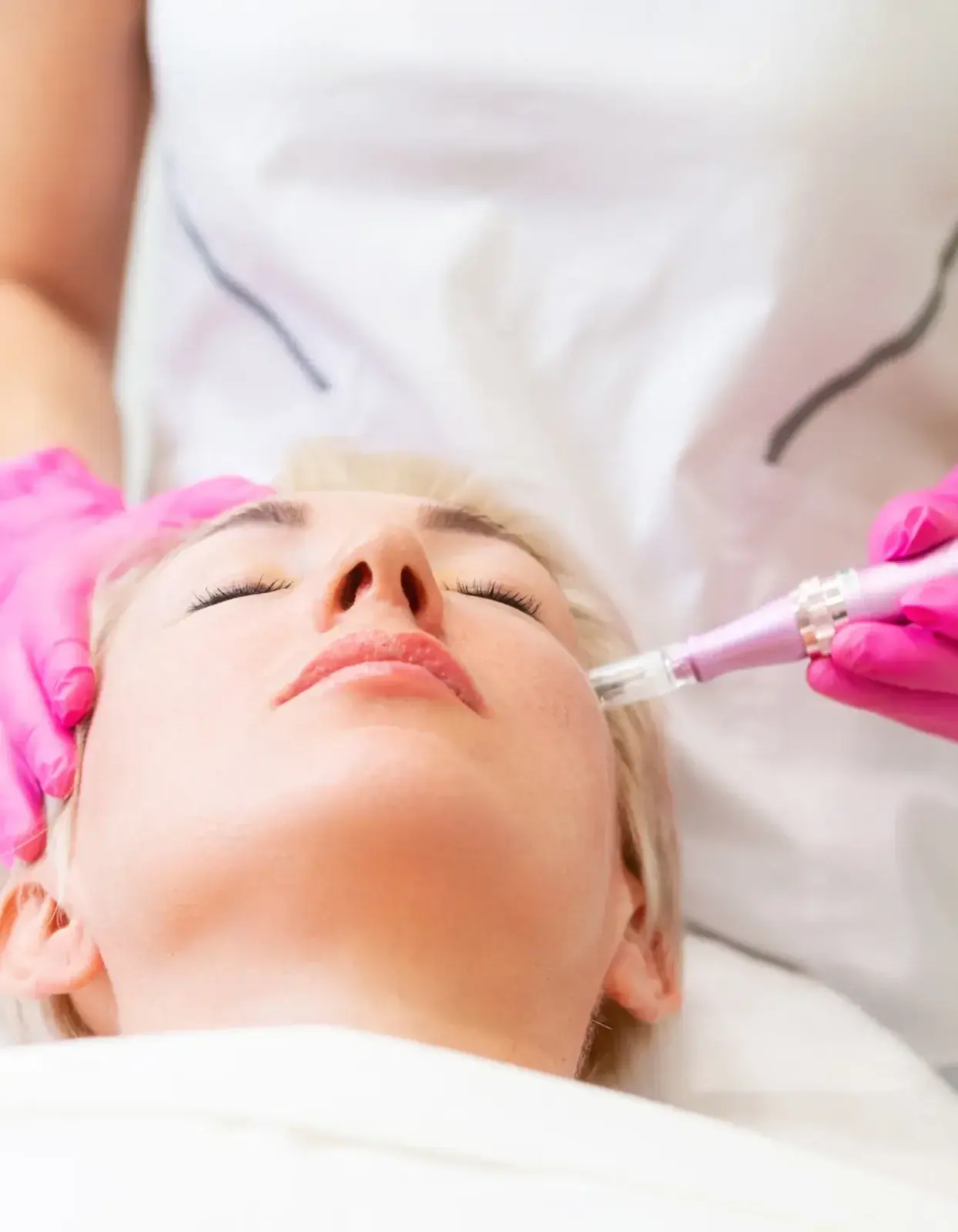
DP4 Microneedling Facial
A microneedling treatment that creates controlled micro-channels at adjustable depths to stimulate collagen remodelling and improve dermal thickness across the forehead.
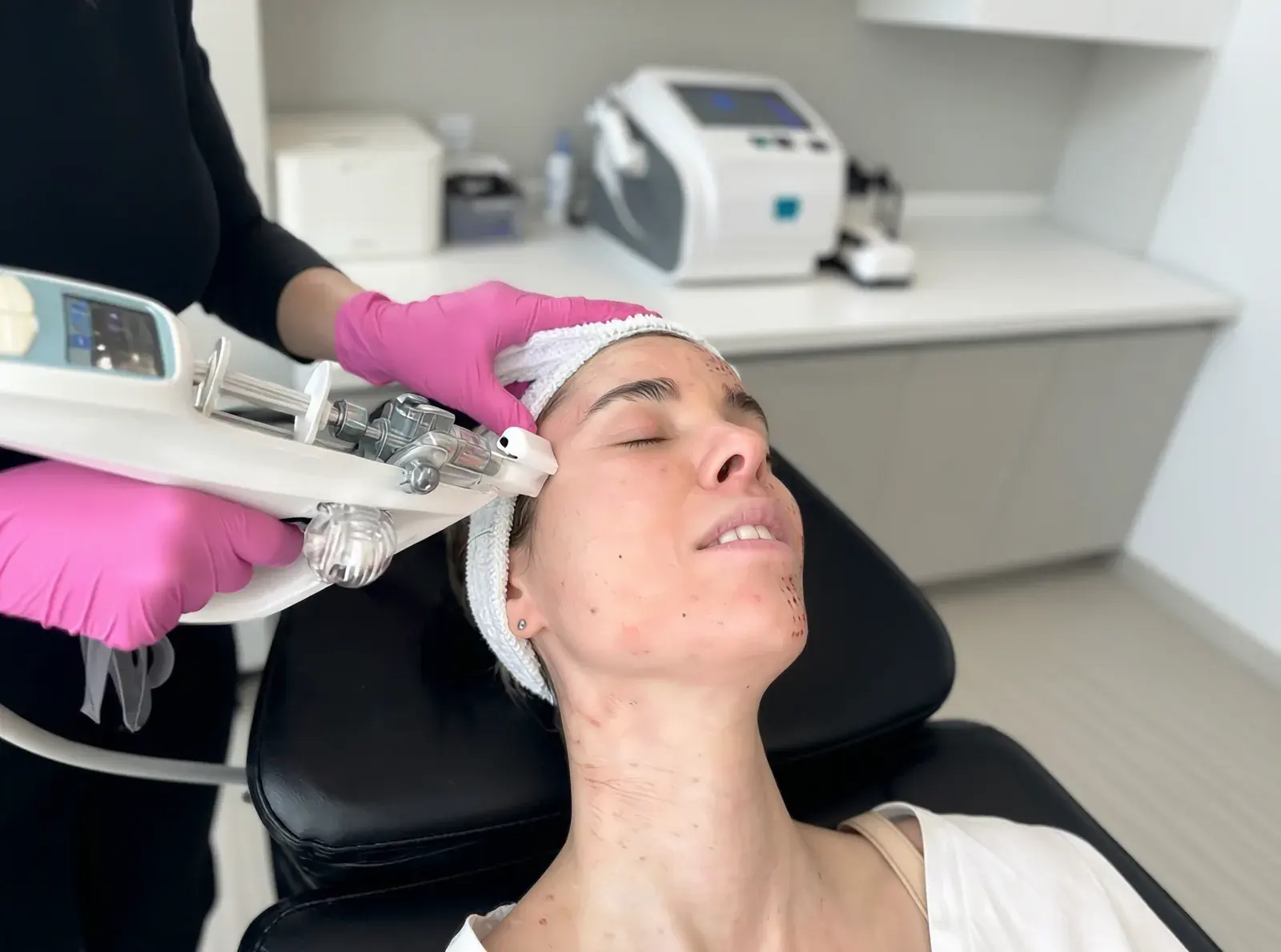
Skin Booster Microneedling
A microneedling treatment that delivers hyaluronic acid into the dermis through controlled micro-channels, hydrating the layer where forehead lines have etched in.
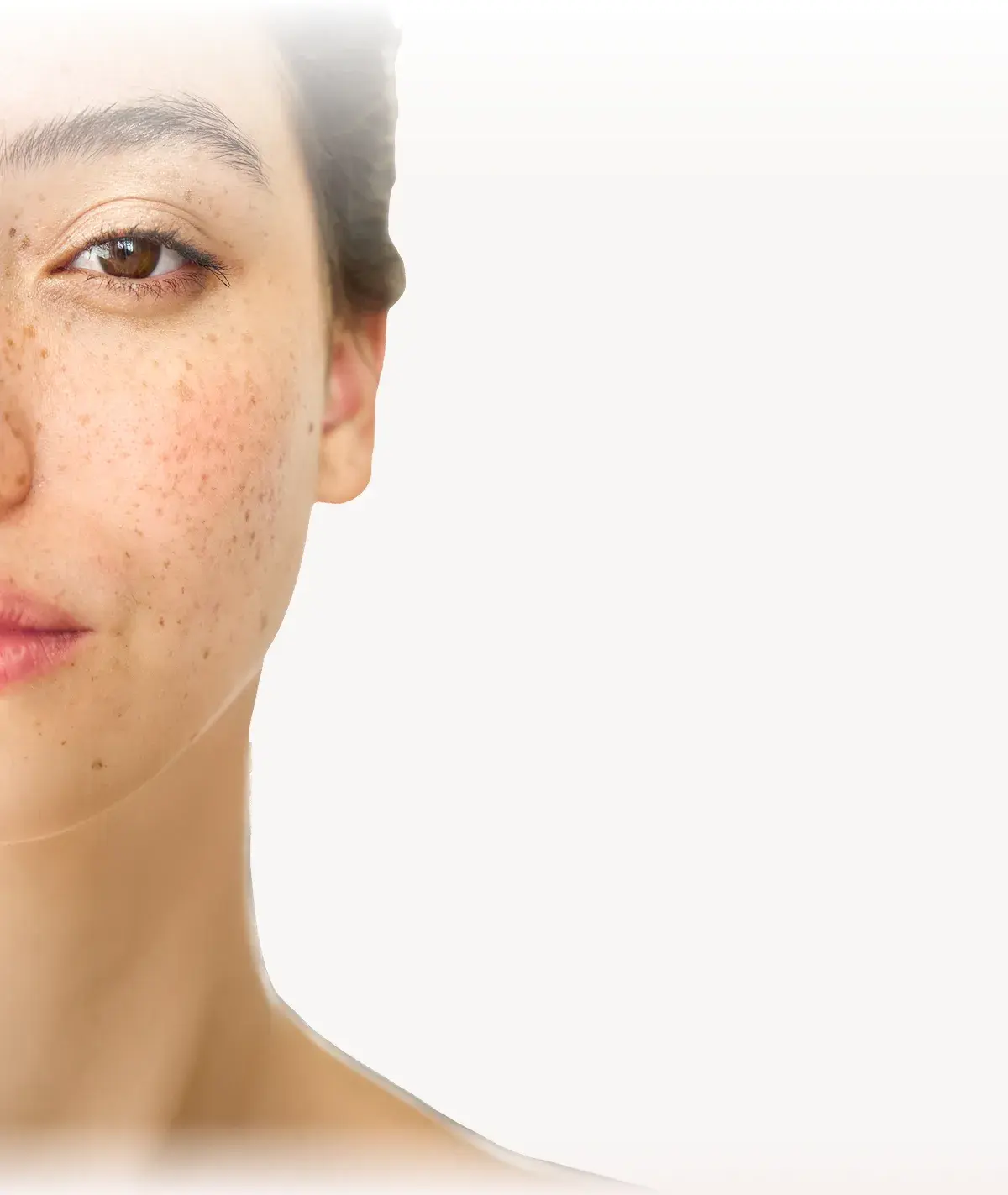
How to Protect Your Skin Between Treatments
Softened lines stay softer when the skin underneath stays strong. Daily collagen support and sun protection carry the result over the long run, and the habits below are how you hold it between visits.

Cleanse Gently

Treat With Retinol

Hydrate the Barrier

Mask Strategically

Protect Daily
Recommended Skincare Protocol
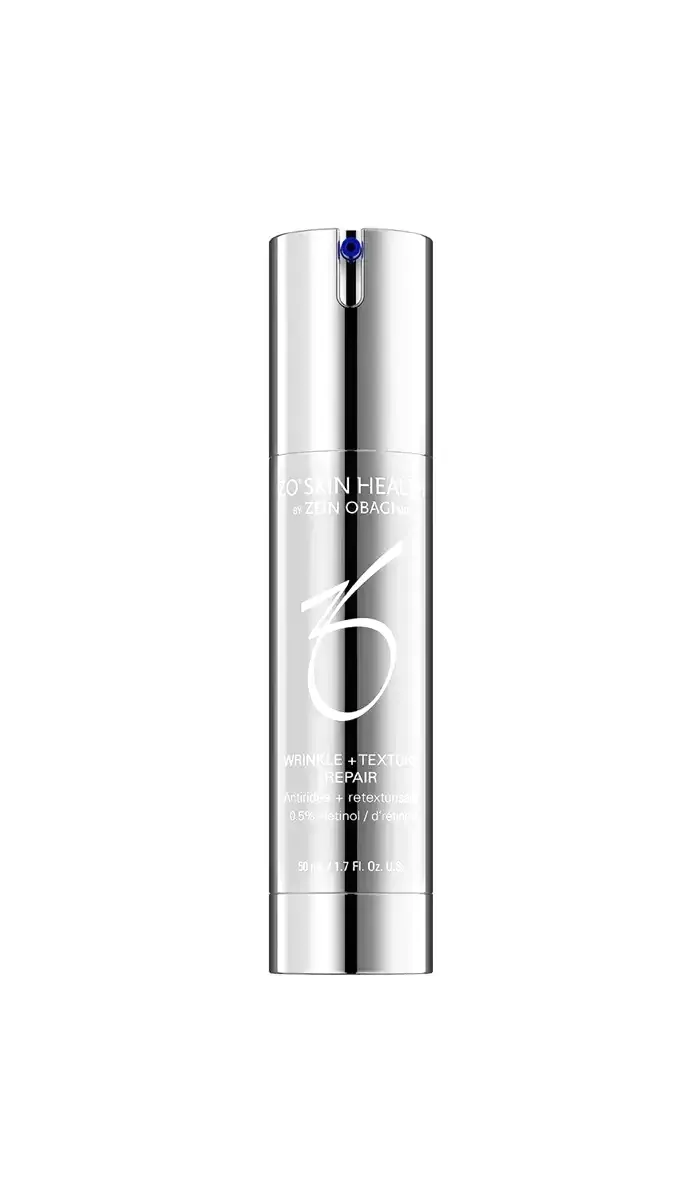
Wrinkle + Texture Repair
A high-potency retinol in a microemulsion delivery system that supports collagen renewal in the dermis, helping soften the look of forehead lines and refine surface texture between treatments.



.webp&w=3840&q=75)



Skin Club Membership
Join the Skin Club
Exclusive Savings on Every Visit.
Beautiful skin is a long-term commitment, and Skin Club membership makes that commitment rewarding. Members receive preferred member pricing, priority booking with their preferred practitioner, and a personalized treatment roadmap so results keep building with every visit.
Discounted treatment packages and member-only pricing
Priority booking and scheduling with your preferred practitioner
Complimentary skin assessments & personalized treatment plans


The right plan starts with the right assessment.
Same-week consultations. No referral required.
FAQ
Common Questions About
Forehead Lines Treatment
Forehead Botox is a small, mapped dose of a muscle-relaxing protein placed into the frontalis muscle. It reduces the strength of the muscle's contraction so the skin above it folds less when you raise your brows. Dynamic lines soften within seven to ten days. Static lines may improve gradually as the skin stops being reinforced by constant movement.
Most patients see results last about three to four months. Some hold longer with repeated treatments, as the muscle gradually trains to contract less aggressively. Your practitioner spaces appointments based on how your treatment metabolises, not on a fixed calendar.
Not when it is dosed properly. Victoria treats the frontalis conservatively and balances it with the brow-lift muscles around it. The goal is to soften the lines while preserving subtle expression. Frozen results usually come from overdosing the frontalis without addressing the surrounding muscle balance.
Botox softens the movement that creates and deepens forehead lines. For lines that are already etched in at rest, Botox alone reduces but does not eliminate them. Combining it with RF microneedling or DP4 microneedling rebuilds the skin in the dermis where the line has set, producing fuller improvement.
Dynamic lines appear only when you express, such as raising your brows or concentrating. Static lines remain visible when your face is at rest. Dynamic lines respond well to Botox alone. Static lines usually need Botox plus a resurfacing treatment to address the structural change in the skin.
Botox itself has essentially no downtime. You may have small pinpoint marks at the injection sites that fade within a few hours, and mild redness. RF microneedling and DP4 microneedling involve one to five days of redness depending on intensity. Your practitioner walks you through what to expect based on your plan.
The injections feel like quick, small pinches. Most patients describe it as briefly uncomfortable, not painful. The needles are very fine, and the appointment itself is short.
Pricing depends on the number of units used and whether your plan includes additional treatments like a brow lift or a microneedling series. We provide a clear cost outline at your consultation so you can plan with confidence.
There is no single right age. Patients often start in their late twenties or early thirties to soften dynamic lines before they etch in. Others come later, when static lines have already formed, and want to address both the movement and the existing creases. Both timings are valid clinical entry points.
You can usually return to light makeup a few hours after treatment, once any pinpoint marks have settled. We ask that you avoid pressing, rubbing, or massaging the forehead for the rest of the day so the product stays where it was placed. Your practitioner reviews the full aftercare with you before you leave.