Loose & Sagging Skin
The jawline that softened over the years.
You notice it in candid photos first. A softer jawline, a faint slack along the cheek, skin that feels thinner and has less spring than it used to. After about age 30 the body makes roughly one percent less collagen and elastin each year, and the skin you see is the result.

Loose & Sagging Skin
The jawline that softened over the years.
You notice it in candid photos first. A softer jawline, a faint slack along the cheek, skin that feels thinner and has less spring than it used to. After about age 30 the body makes roughly one percent less collagen and elastin each year, and the skin you see is the result.
CONCERN & CAUSES
Why Skin Loosens
Three forces compound, and which one is driving your laxity decides which treatment will actually move the needle. In the treatment room, loose skin usually splits into a few distinct patterns.
01
Collagen and Elastin Loss
Collagen gives skin firmness while elastin lets it snap back. Both drop after age 30 and fibres fragment over time, which shows up as surface crepe across the cheeks and upper neck.
02
Structural Descent
Gravity pulls the cheek fat pad lower than it once sat, which reads as early jowling. The platysma muscle slackens too, showing up as neck bands and a softer jaw-to-neck angle.
03
Sun and Weight Change
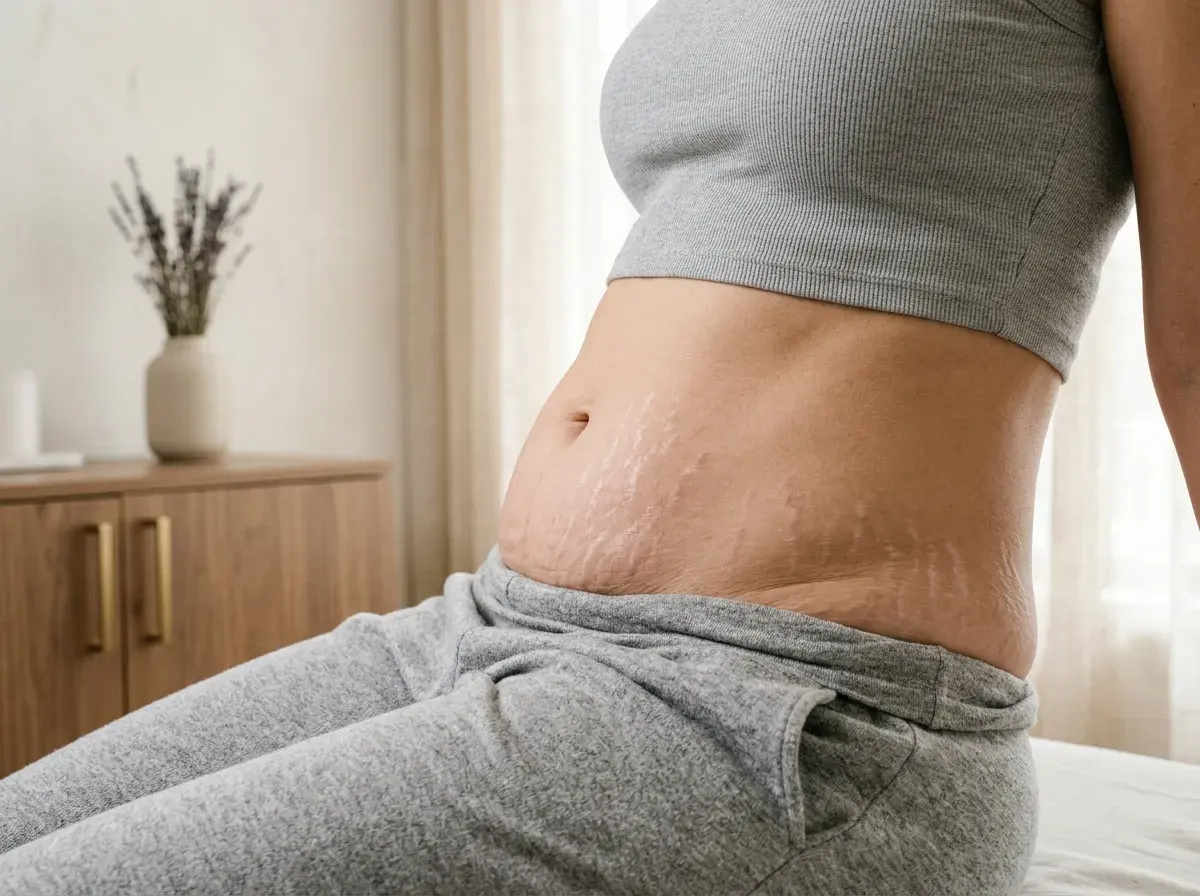
UV exposure breaks down elastin and can advance laxity by five to ten years. Repeated weight fluctuation stretches the skin's elastic envelope past the point where it can fully recoil.
04
Volume Loss With Laxity
When the cheek deflates, the skin above has nothing to anchor to and begins to drape. If hollow cheeks are the lead issue, structural support matters more than tightening alone.
Treatment Benefits
Tightening Protocols for Loose Skin in Pickering
Tightening only works when the device matches your tissue. Victoria, an RN with over a decade of clinical experience, assesses where your laxity sits, dermal, structural, or volume-driven, and selects the protocol that addresses your dominant pattern first.
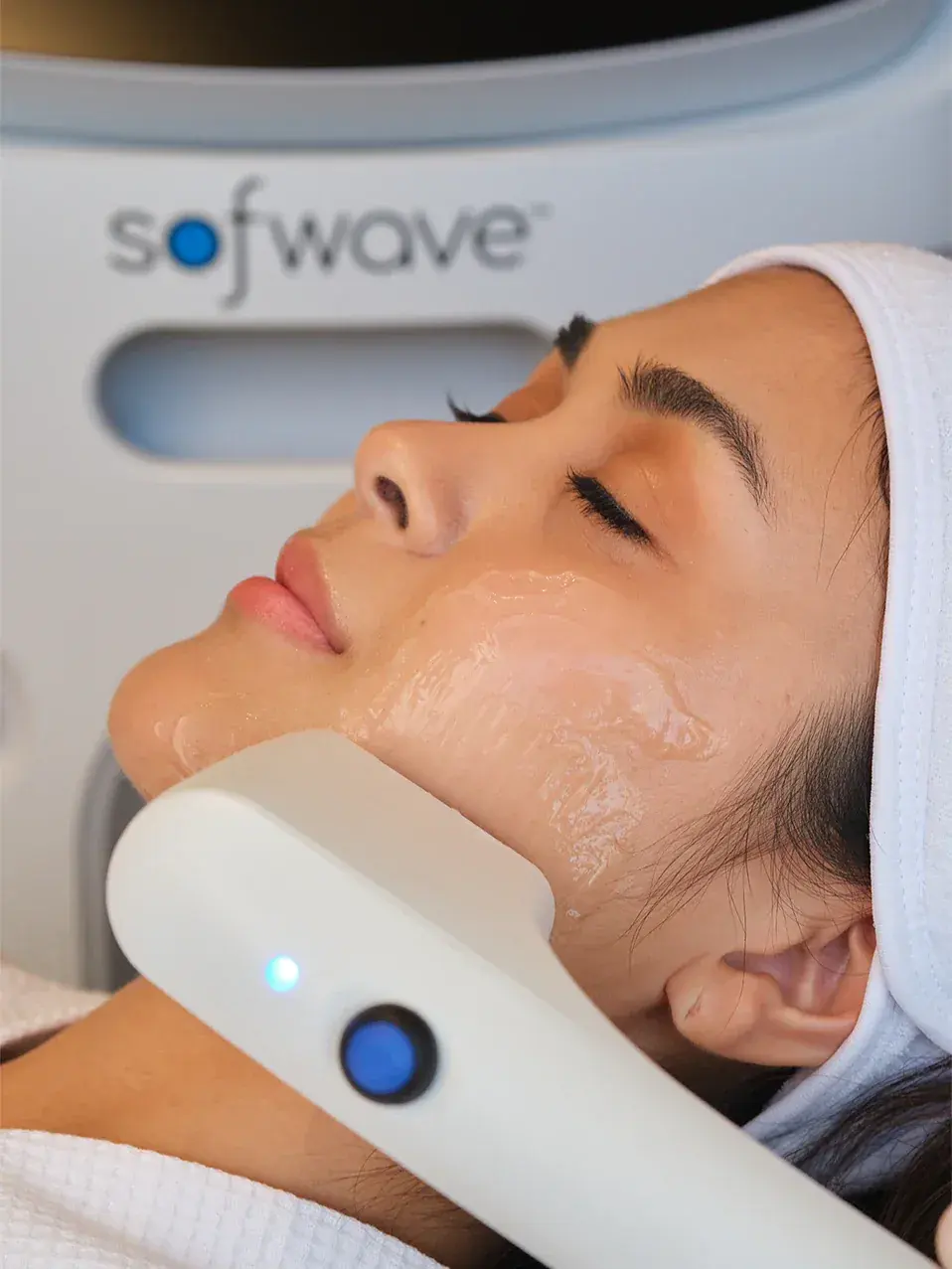
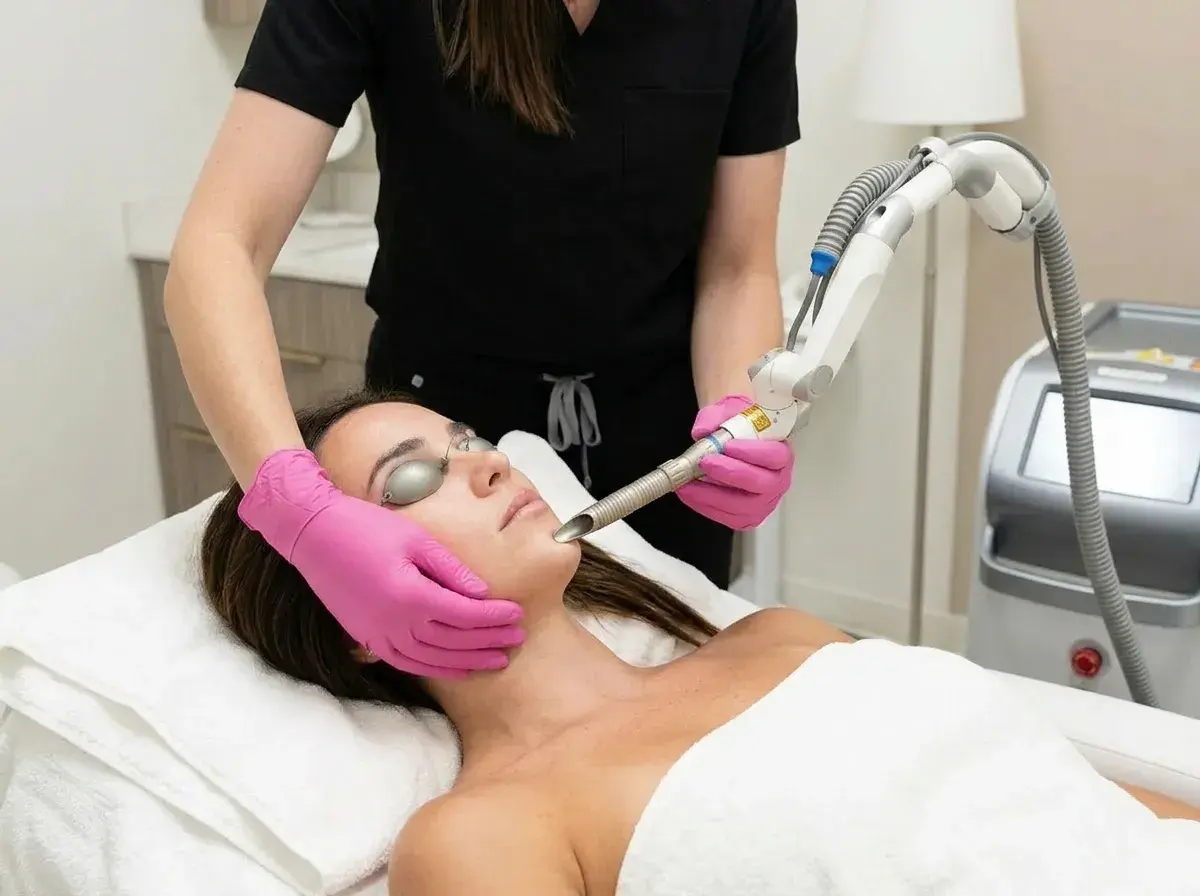
Sofwave
An ultrasound-based device that delivers focused energy to the mid-dermis, the layer where collagen and elastin live, to lift and tighten the brow, lower face, jawline, and neck.
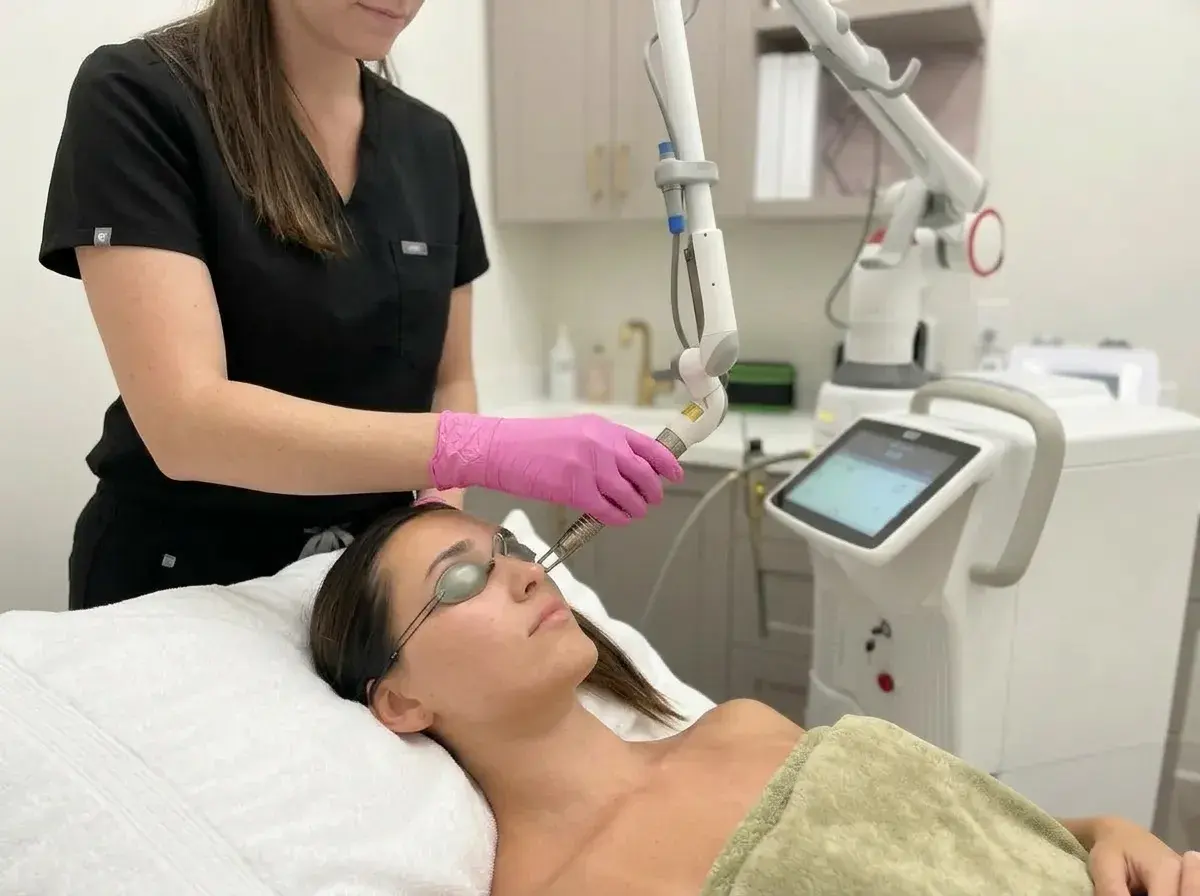
4D Facelift
A four-modality laser protocol on the Fotona platform, where each pass targets a different depth to lift and tighten without injectables or surgery.
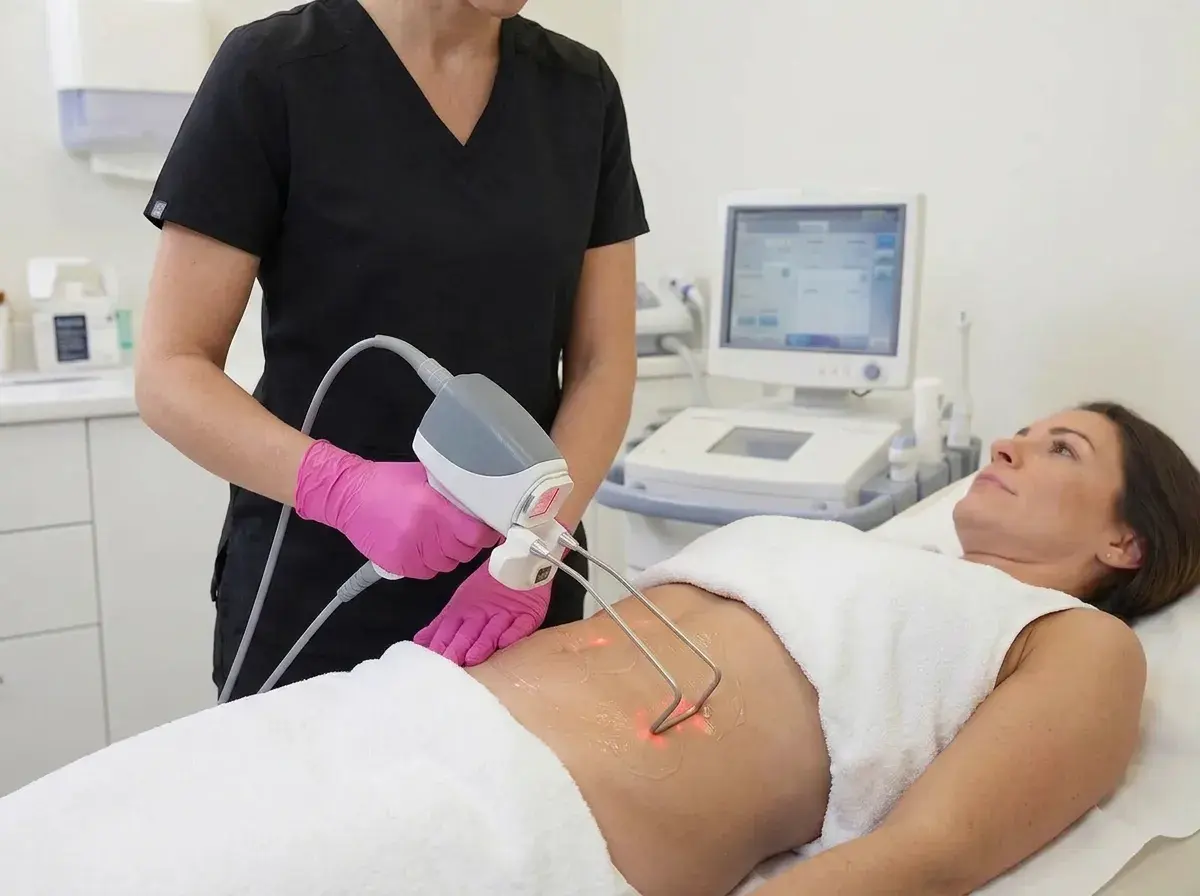
Fotona TightSculpting
A dual-wavelength laser treatment using Nd:YAG for deep dermal heating followed by Er:YAG for surface refinement in the same session.
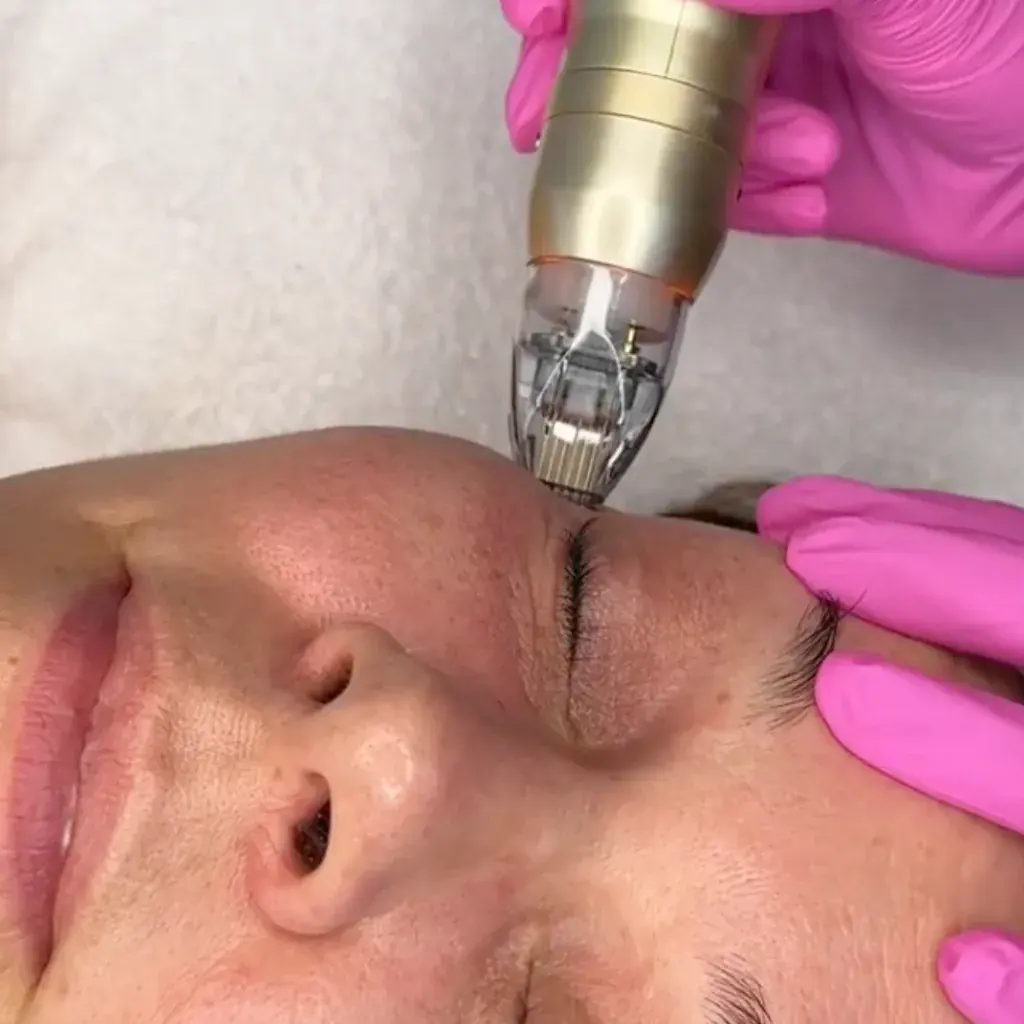
RF Microneedling
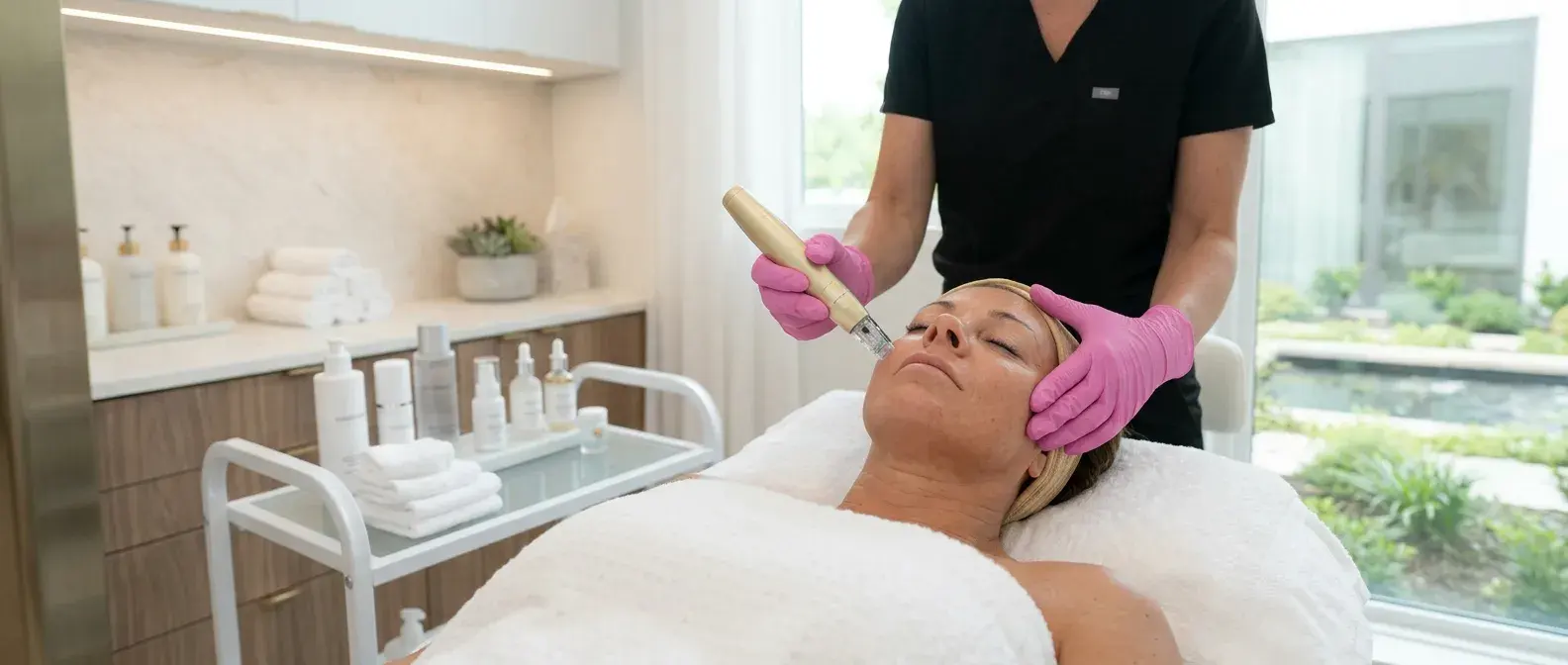
A treatment that combines tiny needle channels with radiofrequency energy delivered at adjustable depths in the dermis to remodel collagen.
Skin Tightening Treatment
A category of monopolar and bipolar radiofrequency devices that warm the dermis to the collagen-contracting threshold without needles.
How to Protect Your Results After Treatment
New collagen builds over three to six months, and the way you care for skin in between decides how well the lift holds. Collagen keeps declining at the age-related rate, so daily habits carry the result over the long run.

Cleanse Gently

Treat Daily

Hydrate the Barrier

Mask Strategically

Protect Daily
Recommended Skincare Protocol
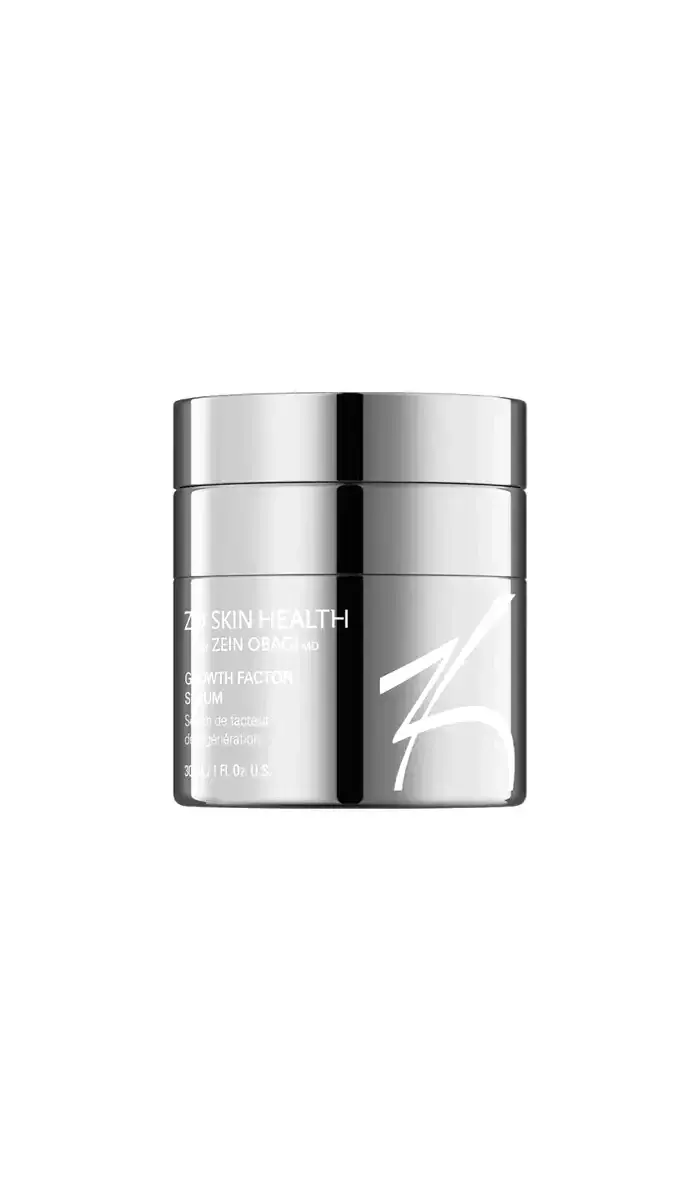
Growth Factor Serum
A peptide and growth-factor serum aimed at firmness and resilience in skin that is starting to lose structure. It works alongside your in-clinic tightening treatments to help hold the result between sessions.



.webp&w=3840&q=75)



Skin Club Membership
Join the Skin Club
Exclusive Savings on Every Visit.
Beautiful skin is a long-term commitment, and Skin Club membership makes that commitment rewarding. Members receive preferred member pricing, priority booking with their preferred practitioner, and a personalized treatment roadmap so results keep building with every visit.
Discounted treatment packages and member-only pricing
Priority booking and scheduling with your preferred practitioner
Complimentary skin assessments & personalized treatment plans


The right plan starts with the right assessment.
Same-week consultations. No referral required.
FAQ
Common Questions About
Skin Tightening
Yes, within a defined range. Devices that reach the dermal or SMAS layer can produce visible lift and improved skin quality over three to six months for mild to moderate laxity. For significant excess skin or advanced jowling, surgery delivers more meaningful results. Your practitioner evaluates where your laxity sits before recommending a protocol.
Sofwave is one of the more substantiated non-surgical options for jawline and lower-face lifting. The 4D Facelift adds intraoral tightening for patients who want a multi-modality session. The right choice depends on your tissue type and how much lift is realistic, which your practitioner assesses at the consultation.
Most patients see results hold for twelve to twenty-four months from a full Sofwave or 4D protocol. Results are not permanent because collagen continues to decline at the age-related rate, so annual or biannual touch-ups are typical for patients who want to maintain the result.
Sofwave typically requires a single session with results building over three to six months. RF microneedling usually involves three to four sessions spaced four to six weeks apart. The 4D Facelift is often done as a series of two to three. Victoria sets the cadence based on your assessment.
Sofwave has effectively no downtime, with mild redness for a few hours. RF microneedling involves one to three days of redness and minor pinpoint marks. The 4D Facelift can involve mild swelling and redness for twenty-four to seventy-two hours. Your practitioner walks you through each recovery before booking.
Yes. Tightening pairs well with hyaluronic acid injections for structural support, neuromodulator treatment for dynamic lines, and resurfacing protocols for surface texture. Your practitioner sequences the plan so each treatment supports the others rather than competing.
Pricing varies by device, treatment area, and number of sessions. Sofwave is priced as a single comprehensive session, while RF microneedling is priced per session in a series. A transparent cost outline is provided at your consultation so you can plan the full protocol upfront.
If you have significant excess skin, deep jowling, advanced platysmal banding, or laxity that has been present for many years, non-surgical tightening will likely fall short. Your practitioner will tell you that directly and refer you to a board-certified plastic surgeon if surgery is the better path.
Yes. Non-surgical tightening works by stimulating your own collagen over weeks and months, so the lift builds gradually rather than appearing overnight. There is no pulled or overdone look, just firmer skin and a more defined contour that settles in slowly as new collagen forms.
There is no single right age. Collagen and elastin begin declining after about age 30, so some patients start gentle tightening in their late thirties to address early surface crepe, while others wait until jawline softening appears in their mid-forties. The right timing depends on your skin quality and goals, which your practitioner reviews at the assessment.
Loose neck skin responds to energy-based tightening that heats the deeper layers and prompts new collagen, firming early laxity over a few months. Radiofrequency and microneedling-with-radiofrequency work gradually across a short course of sessions. Neck skin that hangs loosely after advanced ageing or major weight loss is usually better addressed with a surgical referral, which we can arrange.
Non-surgical tightening uses radiofrequency or focused energy to warm the deeper skin and the supporting layer beneath it, firming softness along the cheeks and jawline over several sessions. The collagen rebuilds gradually, so the change looks natural and holds with occasional maintenance.
After weight loss, early skin laxity can improve with energy-based tightening that rebuilds collagen over a few months, and it suits skin that still has some natural stretch and recoil. Skin that hangs loosely after major or rapid weight loss often will not respond fully to non-surgical options, and a surgical consultation is the more honest path. We can refer you when that is the case.