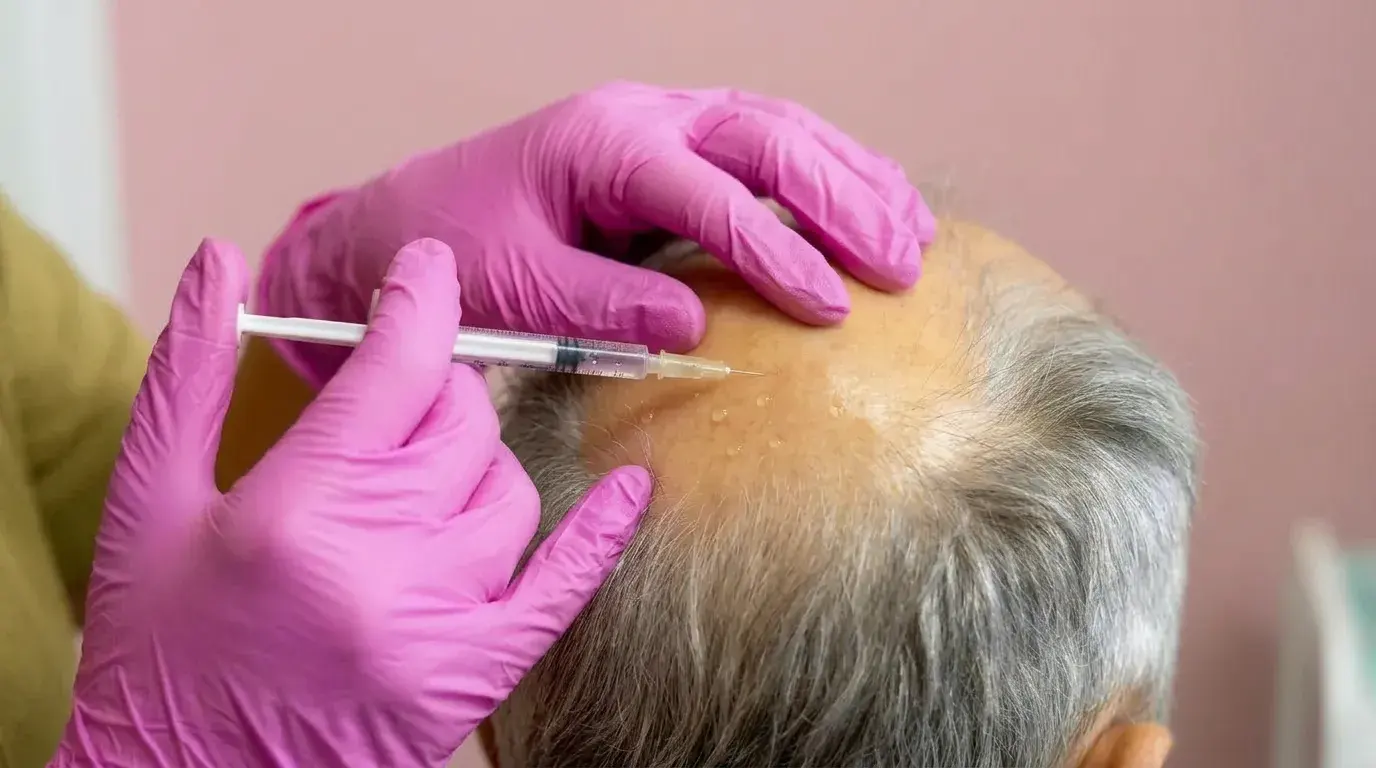
Hair Restoration (PRP)
- •PRP Scalp Injections
- •Reduce Shedding
- •Natural Regrowth Support
- •3 to 6 Sessions
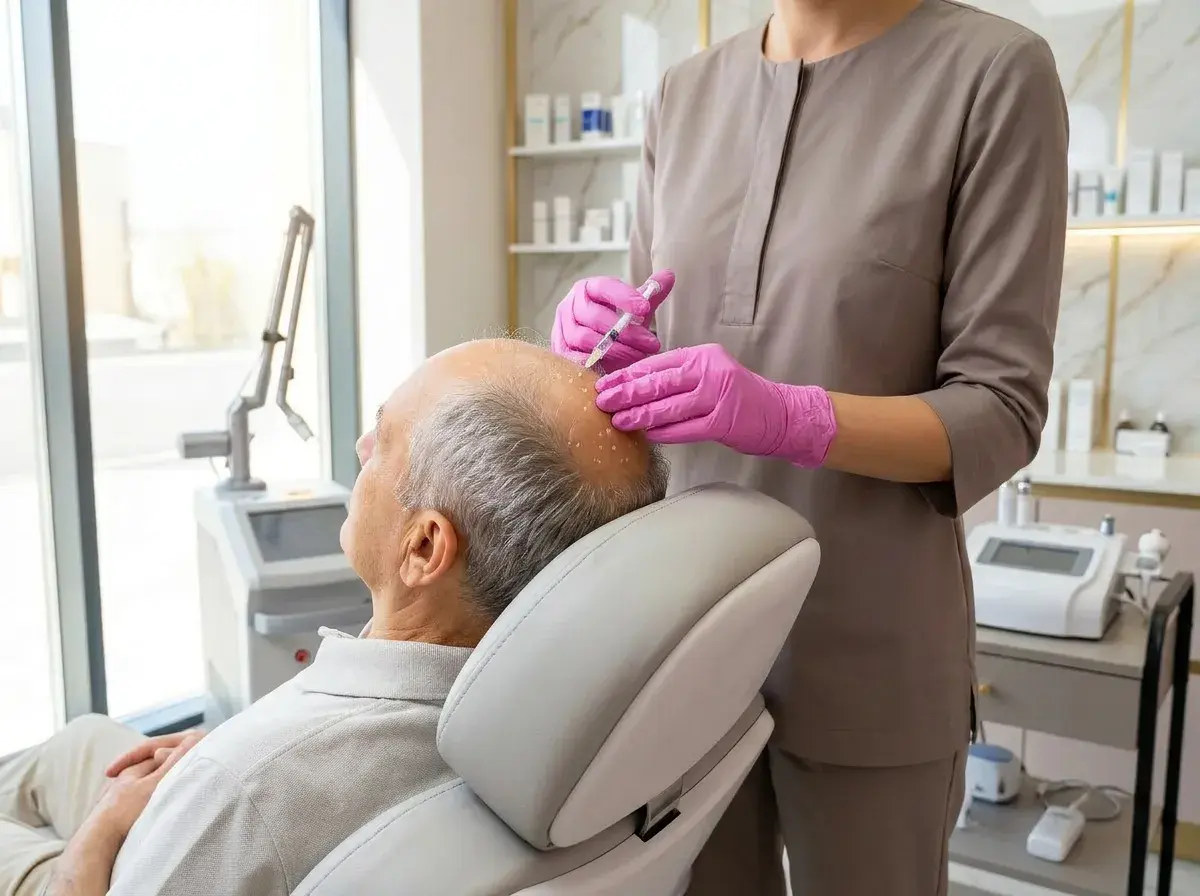
Hair Restoration uses PRP, concentrated growth factors from your own blood, injected into your scalp to stimulate dormant follicles and reduce shedding. It supports natural hair regrowth and works as a hair rejuvenation treatment, with noticeable results starting within 4 to 6 weeks, for patients across Pickering and Durham Region looking for hair restoration close to home.
4.8★ · 163 Reviews
- PRP Scalp Injections
- Reduce Shedding
- Natural Regrowth Support
- 3 to 6 Sessions
Hair Restoration Treatment Goals
What Hair Restoration (PRP) Treats
.webp&w=3840&q=75)
Androgenic Alopecia (Male and Female Pattern Hair Loss)
PRP growth factors delivered to thinning zones stimulate miniaturized follicles and slow the progression of pattern hair loss for both male and female patients.
Treatments+
PRP injects concentrated growth factors from your own blood into thinning zones, stimulating miniaturized follicles and slowing pattern loss.
Causes+
DHT gradually shrinks sensitive follicles, so hair regrows finer and shorter each cycle until it stops appearing.
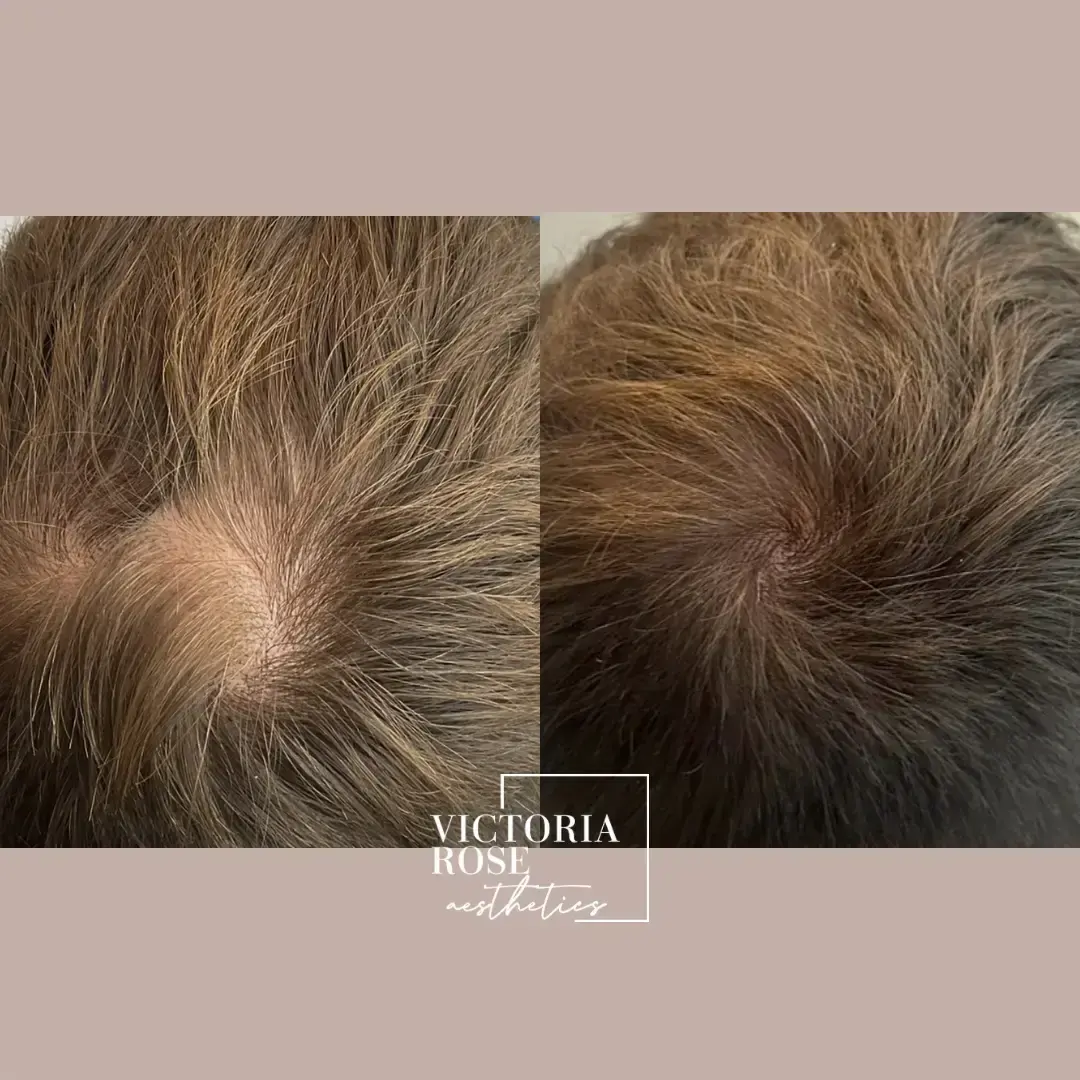
Hair Restoration Results
What to expect as your scalp responds over the months
Weeks 4 to 6
Weeks 4-6 · less shedding
Most patients notice reduced daily shedding within four to six weeks of the first PRP session as follicle health begins to improve. This early change usually comes before any visible regrowth and is a sign the follicles are responding.
Months 2 to 4
Months 2-4 · new growth
New hair growth becomes visible as stimulated follicles produce fresh shafts. Density improves progressively over this window, and many patients feel the difference before it is fully obvious in the mirror.
Full Results (Months 4 to 6)
Months 4-6 · fuller density
By four to six months the new growth from the initial series matures and overall density looks fuller. Results continue to build with the recommended sessions, and annual maintenance helps hold the improvement over time.
The VRA Experience
Why Patients Choose VRA for Hair Restoration
Victoria Rose Cyr, RN, BScN, brings over a decade of clinical experience, plus years spent teaching it, first in the classroom and now as a national clinical trainer for a respected aesthetics brand. Today that expertise goes into her Pickering practice and the team of experts she has built around it.
Victoria Rose Cyr is a Registered Nurse (BScN) and the founder of Victoria Rose Aesthetics, with 10 years of clinical experience, six years running her own practice, and five years as a national clinical trainer. She sets the clinical standard every treatment at VRA is held to.
Victoria trains physicians, nurses, and injectors across Canada in precise, evidence-based technique, and brings that same standard to every treatment her team delivers at VRA.
PRP for hair is drawn and prepared on site and administered over a planned series by a trained VRA practitioner under medical oversight.
Patient Reviews
What Our Patients Say
Honest words from patients at Victoria Rose Aesthetics in Pickering.
I recently had a Sofwave treatment at Victoria Rose Aesthetics and the entire experience exceeded my expectations. From the moment I walked in, the space felt elevated, welcoming, and incredibly…
Antonella Calandra
Victoria Rose Aesthetics · Pickering
Treatment Process
PRP Hair Restoration Treatment Process
From your first consultation through follow-up, here is exactly what to expect at every step of your Hair Restoration (PRP) at Victoria Rose Aesthetics.
Step 01 · Consultation
Consultation and Scalp Assessment
We assess your hair loss pattern, degree of thinning, and follicle viability. Your practitioner reviews your medical history and discusses realistic expectations for PRP at your stage of hair loss.
- Hair loss pattern and degree of thinning assessed
- Follicle viability checked for your stage
- Medical history reviewed, realistic expectations discussed

Skin Club for Hair Restoration
Save on Your PRP Hair Restoration Series
Hair restoration requires a consistent series followed by annual maintenance. Skin Club makes multi-session protocols more affordable.
Preferred pricing on PRP hair restoration sessions
Session reminders at 4 to 6 week intervals
Complimentary scalp assessment between sessions
Hair Restoration Pricing Pickering
Why Patients Choose VRA for PRP Hair Restoration in Pickering
PRP hair restoration depends on careful scalp mapping and well-prepared plasma, so your series starts with a full assessment of what your follicles can realistically achieve.
Full Scalp Assessment
Mapped first
We assess your hair loss pattern and follicle viability before any injection planning, so the series targets the zones most likely to respond.
Medical-Grade PRP
High concentration
Your plasma is prepared in-clinic with a medical-grade centrifuge to isolate a high-concentration PRP for each session.
Honest Expectations
Stage-based
We set realistic goals based on your follicle viability and stage of loss, so you know what density improvement is achievable before you begin.


The right plan starts with the right assessment.
Same-week consultations. No referral required.
FAQ
Your Hair Restoration Questions,
Answered by Victoria
Everything you need to know about PRP hair restoration before your appointment at Victoria Rose Aesthetics.
PRP stimulates existing follicles. It cannot regenerate completely dead ones. Patients with early to moderate hair loss and some remaining follicular activity respond best. Advanced baldness with no remaining follicles is not a good PRP candidate.
3 to 6 sessions spaced 4 to 6 weeks apart for the initial course. Annual maintenance sessions thereafter. The exact number depends on your hair loss stage and response to treatment.
Reduced shedding is typically noticeable within 4 to 6 weeks. New hair growth becomes visible around months 2 to 4. Fuller density from the initial series matures by 4 to 6 months, and results continue to build with the recommended sessions and annual maintenance.
The scalp is sensitive, topical numbing is applied before treatment and local anaesthetic is available for patients who prefer it. Most patients tolerate the procedure well.
Yes. PRP can be used alongside topical or oral hair loss medications for enhanced results. We discuss your current regimen at your consultation.
Yes. PRP is autologous. Your own blood, with no risk of allergy or rejection. The main risks are standard injection-related concerns like scalp soreness for 24 to 48 hours.
For androgenic hair loss and diffuse thinning, the evidence-supported clinical options are platelet-rich plasma (PRP) scalp injections, topical minoxidil, oral finasteride for men, and low-level laser therapy. PRP is the in-clinic option offered at Victoria Rose Aesthetics in Pickering. It uses concentrated growth factors from your own blood to stimulate dormant follicles and strengthen existing ones. Many patients combine PRP with at-home minoxidil or oral medication for compounding results. Your practitioner reviews your hair loss pattern, follicle viability, medical history, and any medications you are already using to recommend the right protocol for your stage of loss. Book a consultation to discuss whether PRP fits your situation.
Follicle health responds to scalp circulation, nutrient support, hormone balance, and reduced inflammation. Practical steps include scalp massage, addressing iron, vitamin D, and ferritin deficiencies through bloodwork, managing thyroid and androgen-related conditions, reducing tension styling, and protecting the scalp from chronic sun exposure. PRP scalp injections add a clinical option that uses your own platelet growth factors to stimulate dormant follicles, without medication or synthetic ingredients. Because PRP is autologous, there is no risk of allergy or rejection. Your practitioner reviews your medical history, recent bloodwork if available, and hair loss pattern at consultation to identify which natural and clinical levers will give your follicles the best chance of recovery.
Hair can be restored when the follicles are still viable, even if they are miniaturized or dormant. PRP scalp injections deliver concentrated growth factors from your own blood directly into the follicular zone, which stimulates the dermal papilla, prolongs the anagen growth phase, and strengthens existing hair shafts. Topical minoxidil, oral finasteride, and low-level laser therapy also work on living follicles to thicken existing hair and reactivate weakened ones. Once a follicle has fully scarred over or died, from advanced androgenic alopecia, traction injury, or scarring conditions like lichen planopilaris, it cannot be restored without surgical transplantation, which is not offered at Victoria Rose Aesthetics. Most patients with early to moderate androgenic loss, postpartum shedding, or diffuse thinning are good candidates for PRP. Typical timelines are reduced shedding within 4 to 6 weeks, new growth around months 2 to 4, and fuller density maturing by 4 to 6 months over a 3 to 6 session series with annual maintenance. Your practitioner assesses your hair loss pattern, follicle viability, and stage of loss at consultation to give you a realistic picture of what density improvement is possible in your case.
Yes. PRP is a well-suited hair loss treatment for women, particularly for female-pattern thinning, diffuse thinning, and postpartum shedding, where the follicles are still viable. It uses concentrated growth factors from your own blood to support natural regrowth without medication. Your practitioner reviews your hair loss pattern and follicle viability at a consultation to confirm whether PRP is the right fit for you.