Choosing the best acne scar treatment in Pickering starts with one check: whether the clinic identifies your scar types before it chooses a device. Rolling, boxcar and ice-pick scars sit at different depths in the skin, and each responds to a different tool. A sound plan uses radiofrequency microneedling for deep collagen remodelling and fractional laser for the surface, staged and combined when the scars call for it. A single device used on every scar reaches only one depth. This guide explains scar types, how each tool works, who should wait, and what results are realistic.
How acne scar types differ in depth
Acne scars form where inflammatory acne destroyed the collagen that supports the skin. The shape of a scar reflects what happened beneath it, and the practitioner reads that shape before choosing any tool. These are the types assessed at a consultation.
Scar type comes before device choice for that reason. A depression tethered from below and a shallow, flat-based scar sit at different levels of the skin, so one tool on its own reaches only part of the problem.
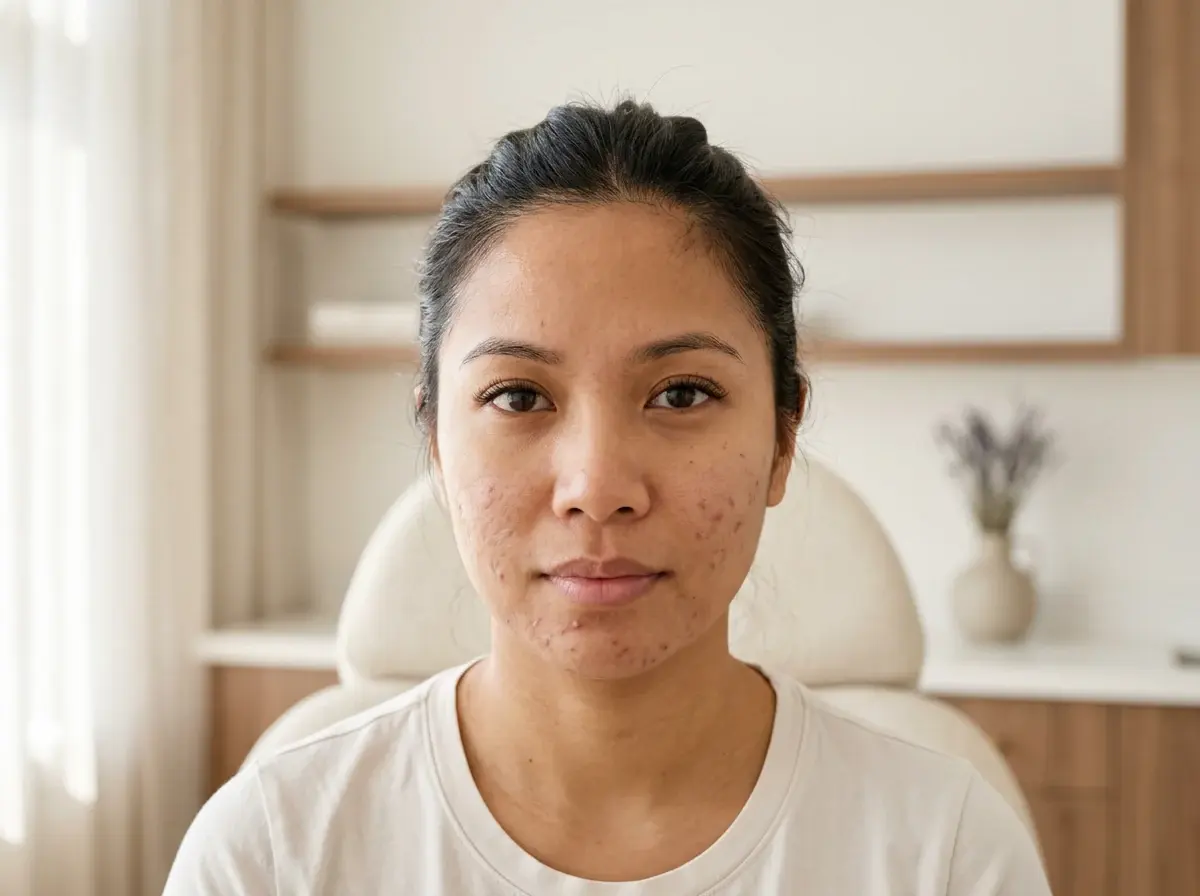
- Boxcar scars are wide, shallow depressions with a flat base, left where inflammatory acne destroyed collagen.
- Rolling scars are broad, wave-like undulations. Fibrous strands beneath the surface tether the skin downward, which creates the rolling contour.
- Ice-pick scars and very deep boxcar scars improve with treatment, though they do not resolve completely.
- Red and brown marks left after a breakout are a separate pigment problem. They are treated with chemical peels, Sylfirm X PW mode and brightening topicals.
How RF microneedling and fractional laser work on scars
RF microneedling with Sylfirm X delivers radiofrequency energy through fine needles into the dermis. The energy drives collagen remodelling at that depth, below the surface where scar tissue has replaced normal support. Because RF energy is not absorbed by melanin, Sylfirm X is suitable across all Fitzpatrick skin types.
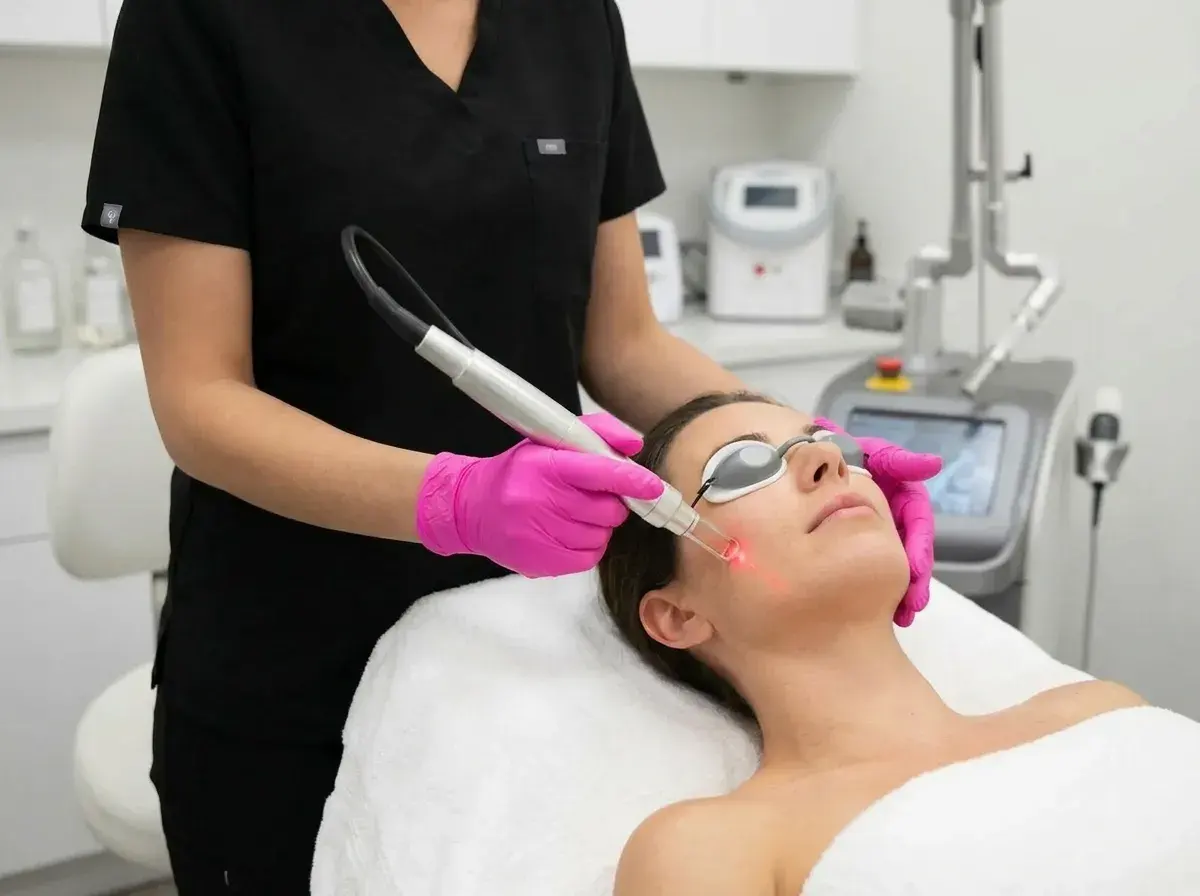
Fotona fractional laser works at the surface. It creates microscopic treatment zones that resurface the outer skin and refine texture. The practitioner adjusts the settings for darker skin tones.
When the scars call for both, the two are combined in one plan: RF microneedling for deep remodelling and fractional laser for the surface. Microneedling with PRP is another collagen option the practitioner may discuss, depending on the scars and the skin.
What to look for in an acne scar clinic
An acne scar clinic is easiest to judge on how it assesses scars before it treats them. These are the specifics to check before booking.
- Scar types identified and named at the consultation, before any device is chosen.
- Skin type and post-inflammatory pigmentation assessed, since both shape device settings.
- More than one tool available, so deep remodelling and surface resurfacing can be staged.
- A plan with a stated session count and spacing, explained up front.
- Named practitioners with a stated role, working under medical oversight.
- A progress assessment partway through, with the protocol adjusted if needed.
- Written aftercare that covers SPF during recovery.
Questions to ask at an acne scar consultation
A sound plan comes with reasons. These questions show how the practitioner reached it and how it will change as the skin responds.
- Which scar types do you see on my skin?
- Which device will you use for each type, and why that one?
- Will you combine RF microneedling and laser in my plan?
- How many sessions do you expect, and how far apart are they?
- How do my skin tone and any pigmentation change the settings?
- Which of my scars are likely to improve only partly?
- Should my current breakouts be addressed before scar treatment starts?
- When will you reassess progress, and what changes if the response is slower than planned?
Who should wait or be assessed first
Acne scar treatment depends on skin that has been prepared and assessed. The practitioner reviews each of the following at the consultation, and in these cases the right step is to wait or to plan around it.
Current breakouts are raised as a question at the same appointment. If active acne is still present, the practitioner discusses how it affects timing before the scar plan begins.
The treatment also has an honest limit. Anyone expecting deep atrophic scars to disappear should know that complete removal is not typically achievable.
- Anyone using retinoids or AHAs who has not paused them for 5 to 7 days.
- Anyone with sun exposure or tanning in the 2 weeks before treatment.
- Anyone whose pigmentation or skin history needs review before a device and setting are chosen.
Acne scar treatment at Victoria Rose Aesthetics in Pickering
Victoria Rose Aesthetics is an independent, RN-led clinic at 1870 Altona Rd, Unit A, in Pickering, founded by Victoria Rose Cyr, RN, BScN. A Nurse Practitioner serves as Medical Director for regulatory oversight. Acne scar reduction is performed by the clinic's Medical Aestheticians, Arden Besner and Katerina Milosevski.
Every plan starts at a $75, 30-minute consultation that includes a skin analysis. The practitioner identifies each scar type, assesses skin type and pigmentation, then explains the recommended devices, the session count and what to expect. All scar types are assessed and treated, though not all of them resolve.
A course typically runs 3 to 5 sessions spaced 4 to 6 weeks apart. A combined session takes 45 to 75 minutes after 30 to 45 minutes of topical numbing. A complimentary progress assessment at the 3-month mark checks the response, and the protocol is adjusted if needed. The clinic serves Pickering, Ajax, Oshawa, Scarborough and Durham Region, and directions are on the Pickering clinic page.
Realistic results and timeline
Collagen remodelling is gradual, so results arrive in stages. Redness from a session settles within 24 to 48 hours. Some texture improvement shows within 4 to 6 weeks of the first session. Most of the improvement appears 2 to 3 months after the final session, and results continue to develop for up to 6 months.
Over a course, most patients see 40 to 70 percent improvement in scar depth and texture. That range describes patients overall and makes no promise for any one person. Complete removal of deep atrophic scars is not typically achievable, and ice-pick and very deep boxcar scars improve without resolving completely.
Preparation and aftercare protect the result. Retinoids and AHAs are paused 5 to 7 days before treatment, and sun exposure and tanning are avoided for 2 weeks prior. The full skincare routine is reviewed at the consultation. SPF is needed during recovery, and the clinic provides written aftercare.
Book a consultation in Pickering
A consultation is where the choice gets made for your anatomy and your history. Book a consultation at Victoria Rose Aesthetics in Pickering.
Victoria Rose Cyr, RN, BScN, is the founder and lead injector at Victoria Rose Aesthetics in Pickering, with more than ten years of clinical experience and over five years as a clinical trainer for Nuceiva and Teosyal.