Choosing the best chemical peel in Pickering comes down to three checks: how the clinic assesses your skin, which acids it carries, and whether it starts at a conservative depth. A chemical peel is a controlled acid injury at a chosen depth. The acid decides which concerns the peel can reach, and the depth decides how many days of shedding follow. A superficial lactic peel and a medium-depth TCA peel are different treatments with different recovery. This guide explains how peels work, which acid does what, who should wait, and what a peel series looks like in Pickering.
How a chemical peel works
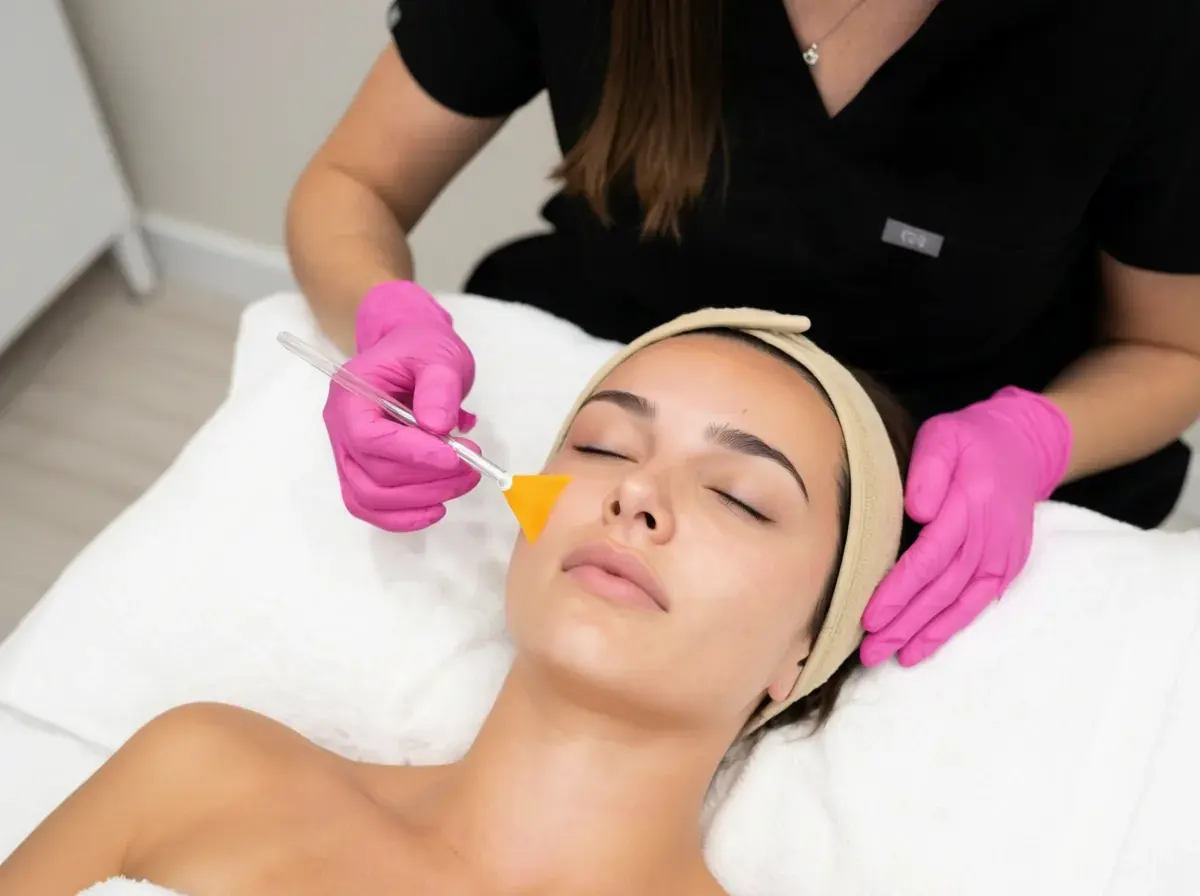
Medical-grade chemical peels work by controlled injury. The practitioner cleanses and degreases the skin, applies an acid for a timed period, then neutralises it. While the acid is on the skin, it breaks the bonds that hold dead surface cells together.
The skin responds by shedding that loosened layer and regenerating from below. Cell turnover speeds up, collagen production is stimulated and pigment is redistributed. That combination is why peels are used for dullness, uneven tone, congestion and rough surface texture.
Depth is set by the acid and its concentration. A superficial peel acts on the outermost layer and asks for little recovery. A medium-depth peel reaches further, and the skin sheds visibly for several days. Both work through the same mechanism, and the depth decides the recovery.
Which acid does what
Each acid has its own chemistry, so the acid choice decides which concern a peel can reach. The practitioner selects it from the skin analysis. For darker skin tones, the acid and depth are chosen for the skin type at the consultation, and no single peel suits every skin tone.
- Glycolic, lactic and mandelic acids are alpha-hydroxy acids (AHAs). They loosen the bonds between dead cells at the surface, and lactic acid is the gentle option for sensitive skin.
- Salicylic acid is a beta-hydroxy acid (BHA). Because it is oil-soluble, it works inside oily pores as well as on the surface, which suits congested and acne-prone skin.
- Kojic acid is used for brightening and is often part of a peel plan for uneven skin tone.
- Trichloroacetic acid (TCA) at 15 to 35 percent produces a medium-depth peel and is sometimes layered with Jessner's solution.
What to look for in a chemical peel clinic
A peel clinic is easiest to judge on three things: how it assesses the skin, which acids it carries and how cautiously it begins. These are the specifics to check before booking.
- A skin analysis before any acid is chosen, ideally with a skin-imaging device that shows pigment and congestion the eye can miss.
- Several acid families on hand, so the peel can be matched to the skin type and the concern.
- A conservative first peel, with depth increased only as the skin adapts.
- Named practitioners with a stated role, such as medical aesthetician.
- Skin cleansed and degreased in the clinic before the acid goes on.
- Written homecare instructions covering retinoids, sunscreen and the shedding days.
- Medical oversight of the clinic, since medium-depth peels act below the surface.
Questions to ask at a peel consultation
A sound recommendation comes with reasons. These questions show how the practitioner reached the plan and how it will change as your skin responds.
- Which acid do you recommend for my skin, and why that one?
- Is this a superficial or a medium-depth peel, and at what concentration?
- What will my skin look like between day 2 and day 5?
- How many peels are in the series, and how far apart are they?
- When should I pause my retinoid, and when can I restart it?
- How will you decide whether to go deeper at the next session?
- How does a peel fit around laser sessions or other treatments I have planned?
Who should not book a chemical peel, or when to wait
A peel depends on intact, settled skin. The practitioner asks about each of the following at the consultation, and in these cases the right answer is to wait or to choose a different treatment.
Peels also have a limit worth stating plainly. Established, pitted acne scars usually need a treatment that works deeper in the skin, so the practitioner may suggest acne scar reduction or RF microneedling. A single peel will not clear established pigmentation either, so that goal is planned as a series from the start.
- An active skin infection or a cold sore in the treatment area.
- Open wounds or sunburn on the skin to be treated.
- Isotretinoin taken at any point in the past six months.
- Pregnancy or breastfeeding, unless medical clearance is in place.
- A history of abnormal scarring, which needs assessment before any acid is applied.
Chemical peels at Victoria Rose Aesthetics in Pickering
Victoria Rose Aesthetics is an independent, RN-led clinic at 1870 Altona Rd, Unit A, in Pickering, owned by Victoria Rose Cyr, RN, BScN. A Nurse Practitioner serves as Medical Director for regulatory oversight. Peels are performed by the clinic's Medical Aestheticians, Arden Besner and Katerina Milosevski.
Peel type and depth are chosen at a $75, 30-minute consultation that includes a skin analysis with a skin-imaging device. The clinic carries glycolic, lactic, mandelic, salicylic and kojic acids, plus TCA for medium-depth peels. The first peel is conservative, and depth increases only as the skin adapts.
Before the acid goes on, the skin is cleansed and degreased. SPF and a gentle moisturiser are applied immediately after, and every client leaves with written homecare instructions. For clients on a laser plan, peels are often scheduled between laser sessions. The clinic serves Pickering along with Ajax, Oshawa, Scarborough and Durham Region, and directions are on the Pickering clinic page.
Recovery, results and maintenance
Recovery follows depth. After a superficial peel there is no visible peeling, only mild redness for a few hours, and the normal routine resumes the same day. The skin brightens over the next 3 to 5 days as the loosened surface cells clear.
A medium-depth peel produces visible shedding from about day 2 to day 5, and the final result settles around day 7. The shedding skin should be left to come away on its own, so picking is the one thing to avoid.
Retinoids are paused for 5 to 7 days before and after each peel. Results build across a series, usually 4 to 6 peels spaced 2 to 4 weeks apart, then monthly or bi-monthly maintenance. Each peel speeds cell turnover and stimulates collagen, so changes in tone and texture accumulate across the series.
Book a consultation in Pickering
A consultation is where the choice gets made for your anatomy and your history. Book a consultation at Victoria Rose Aesthetics in Pickering.
Victoria Rose Cyr, RN, BScN, is the founder and lead injector at Victoria Rose Aesthetics in Pickering, with more than ten years of clinical experience and over five years as a clinical trainer for Nuceiva and Teosyal.