Choosing the best melasma treatment in Pickering comes down to whether a clinic uses low-heat energy, layers it with prescription or medical-grade topicals and daily SPF50+, and talks about control and maintenance from the first visit. Melasma is a chronic pigment condition, and its pigment cells overreact to heat, so an aggressive laser can darken the patches it was meant to lighten. It cannot be permanently cured. It can be managed, improved and kept stable. This guide explains how melasma behaves, what to check in a clinic, who should wait, and what a treatment course looks like in Pickering.
How melasma works, and why heat matters
Melasma is a chronic pigmentation condition. It appears as symmetrical brown patches across the cheeks, forehead and upper lip, and it has three main drivers: estrogen, light and heat. Estrogen exposure comes from pregnancy, the contraceptive pill or hormone therapy. Both UV and visible light drive pigment production, and so does heat on the skin.
The pigment cells in melasma overreact to heat. That is why aggressive ablative or Q-switched lasers can make it worse: the heat triggers post-inflammatory hyperpigmentation, which adds new darkening over the original patches. The risk is higher in Fitzpatrick III to VI skin.
Because those drivers persist, melasma cannot be permanently cured. Treatment lightens the patches and evens tone, and maintenance keeps them controlled. A plan for melasma is judged on how well it controls the pigment over months.
How low-heat energy and topicals work together
A melasma plan layers three treatments, each acting on a different part of the problem. Energy treatment reaches pigment and blood vessels below the surface. Brightening peels speed the shedding of pigmented surface cells. Topicals suppress melanin production between visits.
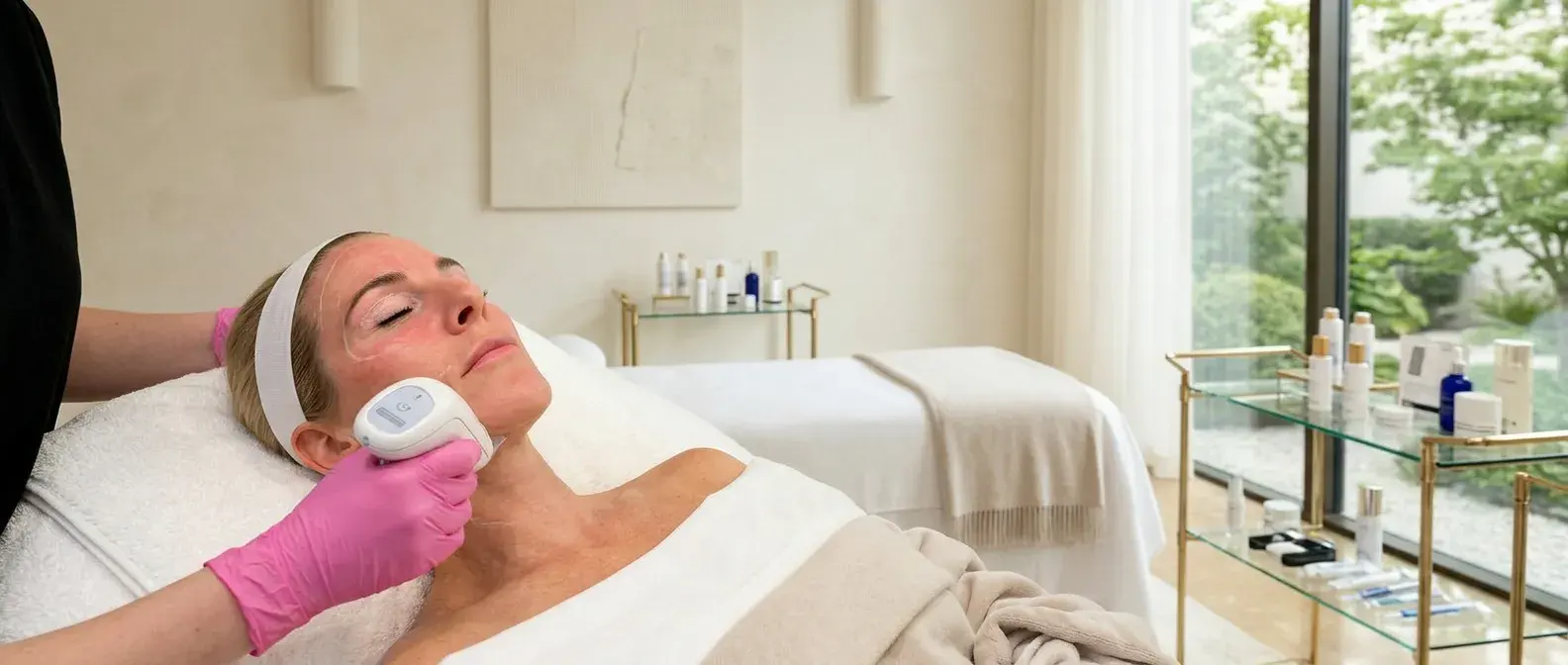
Sylfirm X is a dual-wave RF microneedling platform. In pulsed-wave (PW) mode it delivers radiofrequency energy through fine needles at a controlled depth, targeting the vascular and melanin components of melasma without a surface heat spike. Because the energy is released below the surface, it avoids the kind of heat that can trigger post-inflammatory hyperpigmentation.
Topicals carry the work between sessions. The practitioner picks the actives after assessing depth, sensitivity and history. Options include hydroquinone at 4% prescription strength, tretinoin, azelaic acid, cysteamine, tranexamic acid and kojic acid.
What to look for in a melasma clinic
Melasma rewards caution, so a clinic's approach to heat tells you more than its device list. These are the specifics to check before booking.
- A consultation that assesses melasma depth, type, triggers, skin type and treatment history before any energy is used.
- A low-heat primary device, with any laser reserved for select cases at conservative settings.
- Prescription or medical-grade topicals built into the plan, with the actives chosen for your skin.
- Brightening, non-irritating peels timed between energy sessions.
- A sun-protection plan and a maintenance protocol provided at every session.
- Named practitioners with a stated role, and medical oversight of the clinic.
- Language about control, improvement and maintenance. A promise of permanent removal is a warning sign.
Questions to ask at a melasma consultation
A sound plan comes with reasons. These questions show how the practitioner reached it and how it will change as the skin responds.
- How deep is my melasma, and what type is it?
- Which device will you use, and at what settings for my skin type?
- Will any laser be part of my plan, and why?
- Which topical actives do you recommend, and how do they fit between sessions?
- How many sessions do you expect, and how far apart?
- Could my contraceptive or hormone therapy be a trigger?
- What does maintenance look like once the patches lighten?
- Which sunscreen should I use, and how often should I reapply it?
Who should wait, or get assessed first
Several situations call for a slower or adjusted plan, and the practitioner reviews each one at the consultation.
No full contraindication list is published for this treatment, so the consultation screens for anything else in your medical and skin history before a plan is set. Melasma is highly recurrent without daily SPF50+ and maintenance, so the plan suits people ready to keep both up.
- Estrogen-based contraceptives or hormone therapy. These are known triggers and are discussed sensitively, and stopping them is a personal medical decision.
- Post-partum or breastfeeding. Settings stay low and conservative, peels are non-irritating, and topical choices are reviewed.
- Melasma made worse by an earlier aggressive laser. This needs a recalibrated, gentler plan.
Melasma treatment at Victoria Rose Aesthetics in Pickering
Melasma treatment at Victoria Rose Aesthetics is performed by the clinic's Medical Aestheticians, Arden Besner and Katerina Milosevski, at 1870 Altona Rd, Unit A, in Pickering. It is an RN-led clinic, with a Nurse Practitioner Medical Director providing regulatory oversight. Care is conservative and staged, because aggressive settings can worsen melasma.
Every plan starts with a $75, 30-minute consultation that includes a skin analysis. The practitioner assesses depth, type, triggers, skin type and treatment history, then sets realistic expectations and a sun-protection plan before any energy is used. Settings are chosen for the skin type at that visit.
Sylfirm X in PW mode is the primary energy device. The Fotona laser is reserved for select cases at conservative low-fluence settings. Medical-grade brightening chemical peels are scheduled between sessions. The clinic serves Pickering, Ajax and the wider Durham Region, and directions are on the Pickering clinic page.
Realistic results, timeline and maintenance
Each Sylfirm X session takes 30 to 45 minutes. A typical course is 3 to 6 sessions spaced 4 to 6 weeks apart, running over 3 to 6 months. Month 1 starts treatment and the topical. Months 2 to 4 usually bring steady lightening and a more even tone. The plan is adjusted to how the skin responds, and the timeline is a typical range that varies from person to person.
Maintenance follows: periodic sessions, ongoing topicals and daily SPF50+. Sunscreen should be broad-spectrum, covering UVA and UVB, applied every morning and reapplied every 2 hours during sun exposure. A tinted SPF with iron oxides adds protection against visible light. Without daily SPF50+ and maintenance, melasma is highly recurrent, which is why a maintenance protocol is provided at every treatment session.
Book a consultation in Pickering
A consultation is where the choice gets made for your anatomy and your history. Book a consultation at Victoria Rose Aesthetics in Pickering.
Victoria Rose Cyr, RN, BScN, is the founder and lead injector at Victoria Rose Aesthetics in Pickering, with more than ten years of clinical experience and over five years as a clinical trainer for Nuceiva and Teosyal.
.webp&w=3840&q=75)