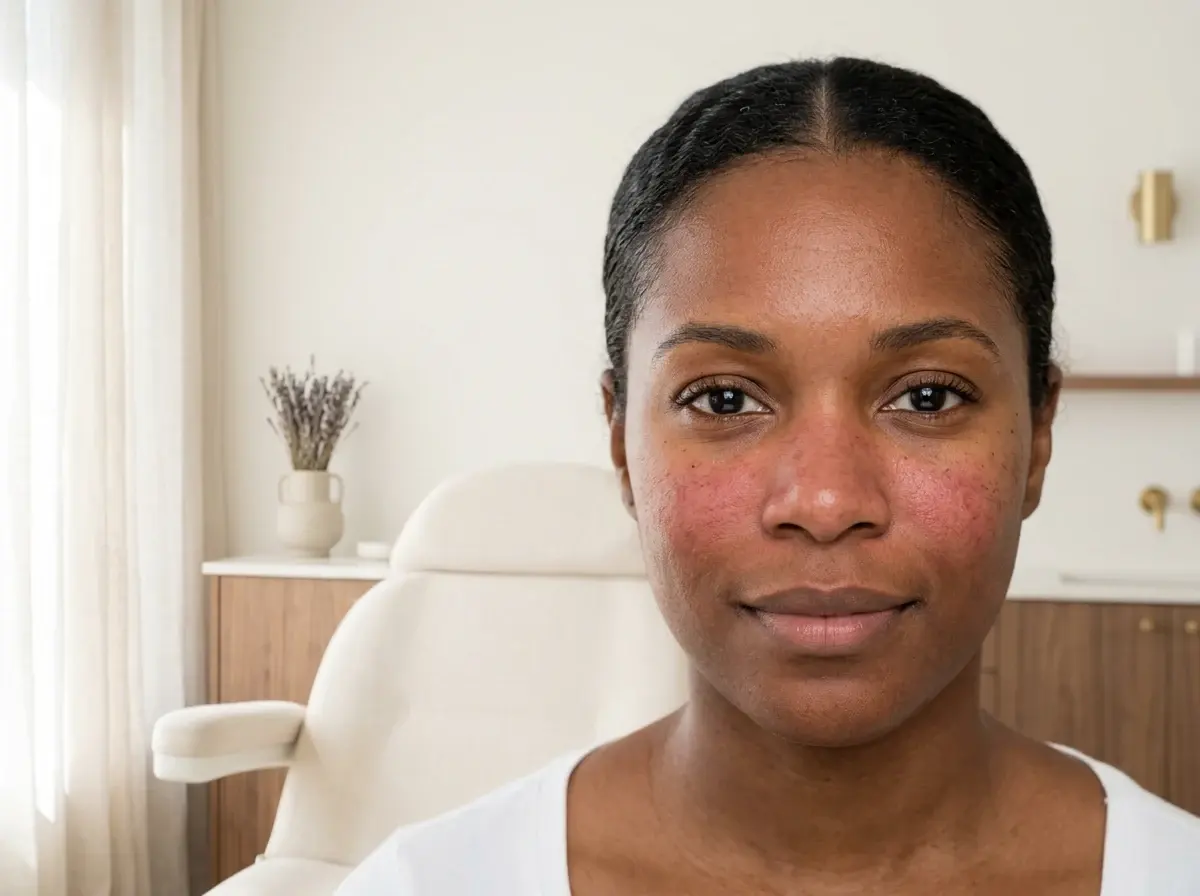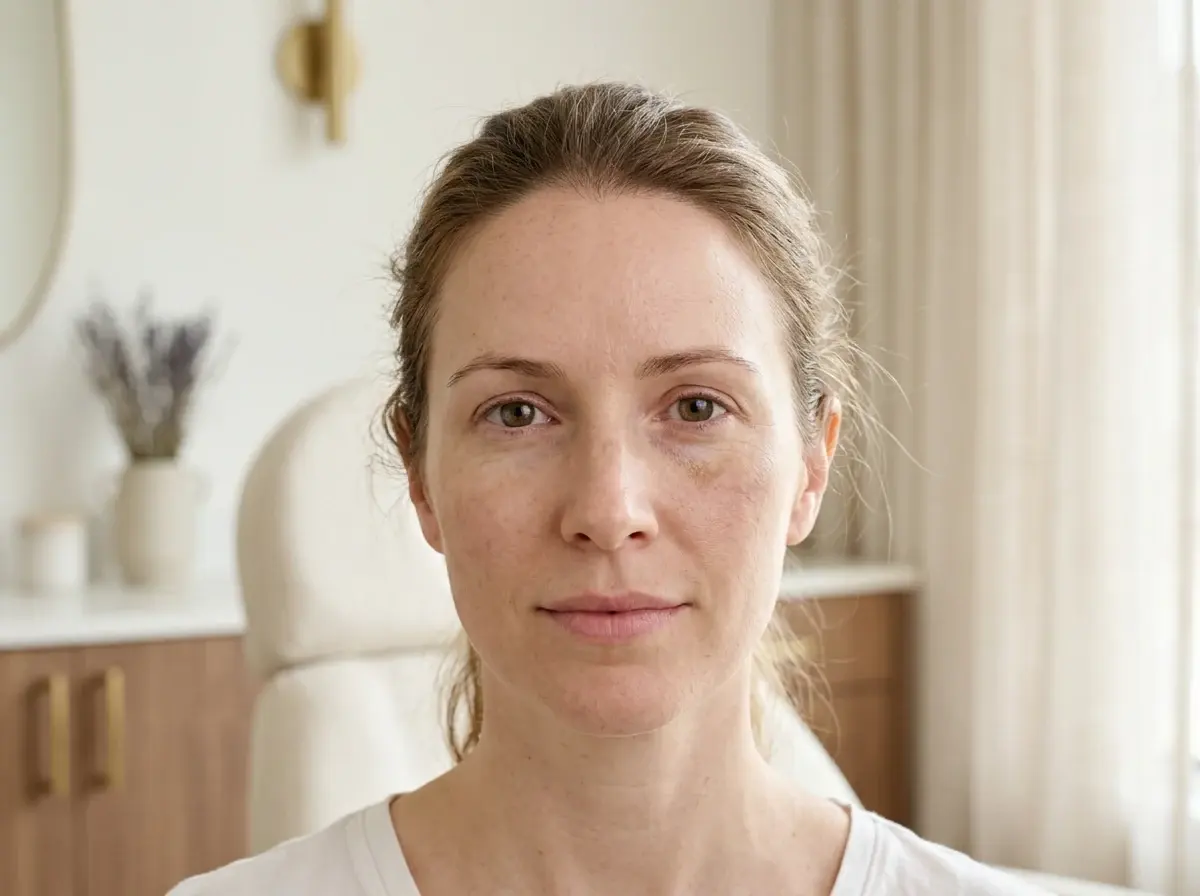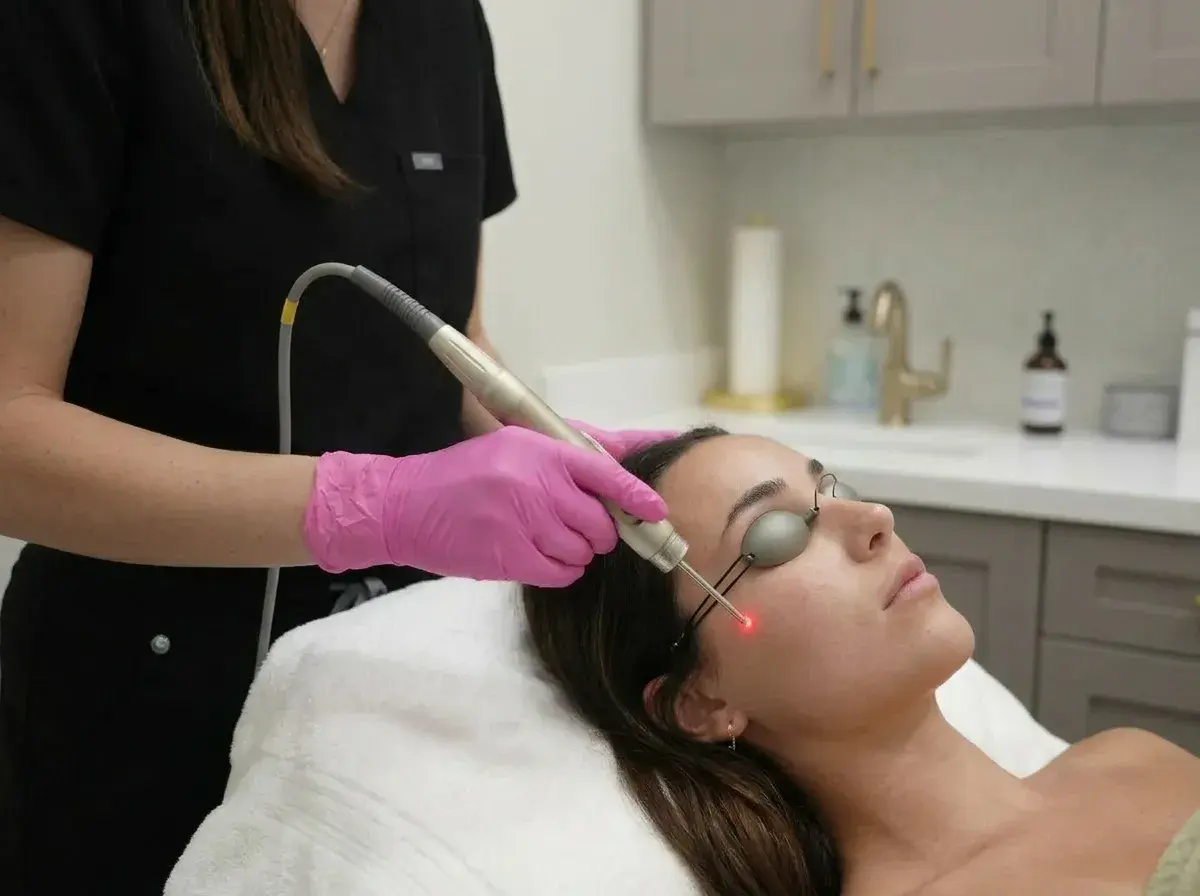
The best rosacea treatment in Pickering starts with a clinic that identifies your rosacea subtype and triggers before any device is chosen, then uses a vascular laser such as the Fotona Nd:YAG for redness and visible vessels. Rosacea is a chronic, trigger-driven condition. A vascular laser works on the dilated vessels that produce the redness, and it does not switch off the condition behind them. Results are measured as control and reduction, kept up with maintenance sessions. This guide explains how vascular laser works on rosacea, what to check in a clinic, who should wait and what a realistic series looks like.
How a vascular laser works on rosacea
Much of the redness in rosacea comes from blood vessels near the surface that have dilated and stay dilated. Some show as fine visible vessels, called telangiectasia. Others sit behind a diffuse flush across the cheeks and nose. A vascular laser targets those vessels directly.
The Fotona Nd:YAG wavelength is absorbed by hemoglobin, the pigment in red blood cells. That absorbed energy heats the dilated vessel until it collapses, which reduces both the diffuse redness and the visible surface vessels.
Where flushing and vascular reactivity are significant, the practitioner may add Sylfirm X dual-wave RF, the device behind RF microneedling, to target the underlying vascular proliferation. The laser works on vessels that are already visible, and the RF works on the proliferation beneath them.
Neither device changes rosacea as a condition. Both reduce what is visible, and results build progressively across a series of sessions.
What to look for in a rosacea laser clinic
A rosacea clinic is easiest to judge on three things: how it assesses the skin, which device it uses on the vessels, and how it describes the outcome. These are the specifics to check before booking.
- An assessment of rosacea subtype, severity, triggers and skin sensitivity before any device is chosen.
- A skin analysis with a skin-imaging device as part of the consultation.
- A vascular-appropriate device, such as an Nd:YAG laser, matched to redness and visible vessels.
- Conservative settings for reactive skin, reassessed at every visit.
- A clear policy of postponing treatment when the skin is actively flaring.
- Outcome language built on control, reduction and maintenance. A clinic that promises a cure is overstating what laser can do.
- Trigger guidance and written aftercare as part of every session.
- Medical oversight of the clinic, and a named role for the person operating the laser.
Questions to ask at a rosacea consultation
A sound plan comes with reasons. These questions show how the practitioner reached the recommendation and how it will change as the skin responds.
- Which rosacea subtype do I have, and how did you identify it?
- Which device do you recommend for my redness and visible vessels, and why that one?
- Will you add RF to the laser, and what will it target?
- How many sessions are in the series, and how far apart are they?
- What happens if my skin is flaring on the day of treatment?
- Which of my triggers matter most between sessions?
- What does maintenance look like once the series is finished?
Who should wait, or choose a different treatment
A vascular laser works on settled skin. If the skin is actively flaring or highly reactive on the day, treatment is postponed and the series begins once it calms. Settings are calibrated for reactive skin, and the practitioner still reassesses the skin at each visit.
Some goals call for a different tool. Texture and scarring sit in the structure of the skin, away from the vessels this laser targets, so they need a separate plan. CO2 resurfacing is a poor fit for active rosacea because it can aggravate the condition.
Bumps and pustules are a common reason to see a physician first. As general guidance, a prescription topical may be the first step for that inflammation, with vascular laser considered for the redness that remains.
- Skin that is actively flaring at the time of the visit.
- Skin that is highly reactive on the day of treatment.
- A main goal of texture or scarring, which sits outside what a vascular laser targets.
- An expectation of a permanent result. Laser controls and reduces rosacea, and maintenance is part of the plan.
What a laser rosacea session involves
A session follows a set sequence. The practitioner applies cooling gel before the laser pass, and topical numbing is available. Each pulse produces a mild snapping sensation on the skin.
A Fotona pass across the full face takes 20 to 30 minutes. When Sylfirm X is added, the combined session runs 45 to 60 minutes. Mild redness and warmth for a few hours afterward is normal.
Aftercare is short and specific, and it protects the skin while the treated vessels settle.
- No makeup for 24 hours. Mineral makeup is acceptable from day 2.
- SPF applied after treatment.
- Known triggers kept in check: heat, spicy food, alcohol, UV exposure and stress.
Laser rosacea treatment at Victoria Rose Aesthetics in Pickering
Victoria Rose Aesthetics is an independent, RN-led clinic at 1870 Altona Rd, Unit A, in Pickering, founded by Victoria Rose Cyr, RN, BScN. A Nurse Practitioner serves as Medical Director for regulatory oversight. Laser rosacea treatment is delivered by the clinic's Medical Aestheticians on Health Canada-approved devices: the Fotona Nd:YAG laser, with Sylfirm X dual-wave RF added where flushing is significant.
Every plan starts at a $75, 30-minute consultation that includes a skin analysis with a skin-imaging device. The practitioner confirms the rosacea subtype, reviews severity, triggers and skin sensitivity, then selects the device combination and settings. Parameters start conservative for reactive skin and are reassessed at every visit. Lifestyle and topical guidance on trigger management comes with every session.
The clinic serves Pickering along with Ajax, Oshawa, Scarborough and Durham Region, and directions are on the Pickering clinic page.
Realistic results and maintenance
Most patients see significant improvement over a series of 3 to 5 sessions, spaced 4 to 6 weeks apart. Results build progressively, so progress is judged across the whole series and the plan is reviewed at each visit.
Results from a series last about 6 to 12 months. Rosacea is chronic, so the condition stays and redness can build again over time. Maintenance every 6 to 12 months keeps the reduction in place.
Trigger management carries the work between visits. Heat, spicy food, alcohol, UV exposure and stress are the common triggers, and keeping them in check is part of the treatment plan. Laser reduces the visible vessels, and trigger control helps limit how much new redness the skin produces between sessions.
Book a consultation in Pickering
A consultation is where the choice gets made for your anatomy and your history. Book a consultation at Victoria Rose Aesthetics in Pickering.
Victoria Rose Cyr, RN, BScN, is the founder and lead injector at Victoria Rose Aesthetics in Pickering, with more than ten years of clinical experience and over five years as a clinical trainer for Nuceiva and Teosyal.